Originally published at kemptation.com on 20 November 2015.
Featured photo credit: Max McClure, courtesy of Situations
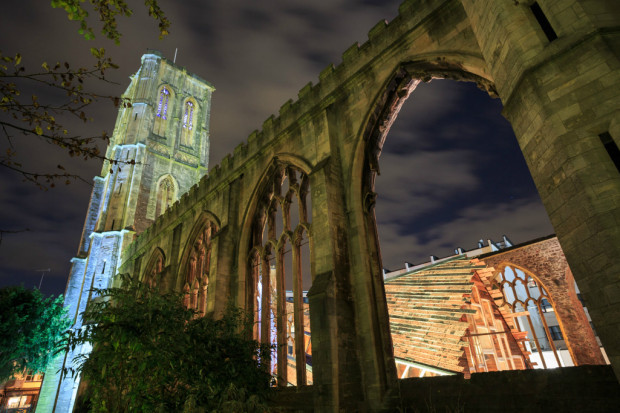
Public art pioneers Situations held a 24-hour, 24-day exhibition of sound inside the remains of Temple Church, Bristol, a disused place of worship that was bombed out during the Second World War. The project, simply called Sanctum, promised to give Bristolians a brand new way of looking at, and listening to, their beautiful city.
Over the three and a half weeks, Sanctum hosted intimate choir recitals, kids jungle parties, makeshift punk bands (so makeshift that they were literally made up on the spot using audience members), spoken word performances and mystic chants.
Kemptation brought published authors and poets to explore the Sanctum and give their reactions in the best way they know how: by writing them down. The following poems and short stories include notes on which Sanctum performances inspired them.
Herd
By Anna Mace
Reaction to Sacred Harp Choir performing at 6:30pm on Tuesday 17 November 2015
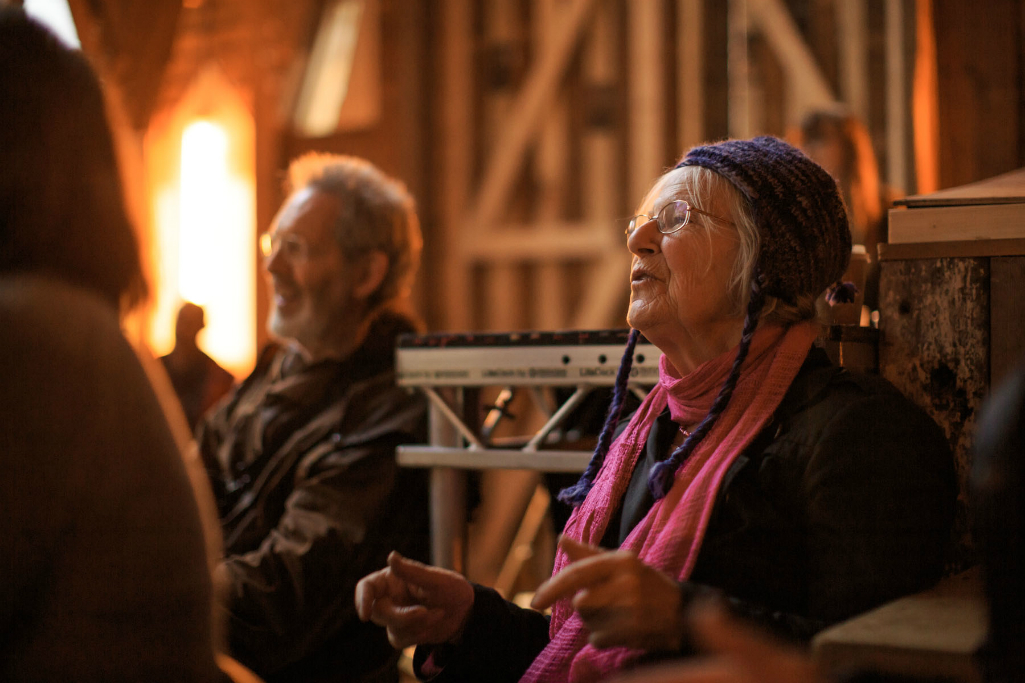
Photo credit: Max McClure, courtesy of Situations
Just before the singing started,
I noticed the way your ring,
hugged the slimness of your finger
as you spoke, denting the flush of grace
here, like you were tracing maps
or diagrams with bright, just in the turn
of wrist.
Fingernails reflecting ghosts, black,
white, all I could see were the details,
reminding me of slide and sweep
of my bow on violin, and how it used
to draw a tear.
And despite the choir’s beat to death
and god, the rolled up paper on the
side roared threat on rain-soaked
leaders,
claiming foreign fiends coding
messages with PS4s
sprayed messages with bullets,
spelling out plans in Super Mario
makers coins, how dare they?
Kill this harmony?
Calling fiercely to gather allies;
fruit flies, like a banana.
Tonight, this is my sanctuary,
whilst the scrawling wind screams
injustice,
sacred harp remind me
how fragile voices can break.
And hold, on. Still,
how does the scale of life measure
in the shapenotes of crescent moons
against the light? The texture
I can feel to the tips of my fingers,
in my bones, eyelashes, resting
in between the silence and each note.
Anna Mace’s poetry was shortlisted for The Melita Hume Poetry Prize 2015. Her latest work is set to be published in the limited edition bookart Revolve:R.
Ladies Night
By AA Abbott
Reaction to Nick Terrific performing at 11:00am on Sunday 15 November 2015
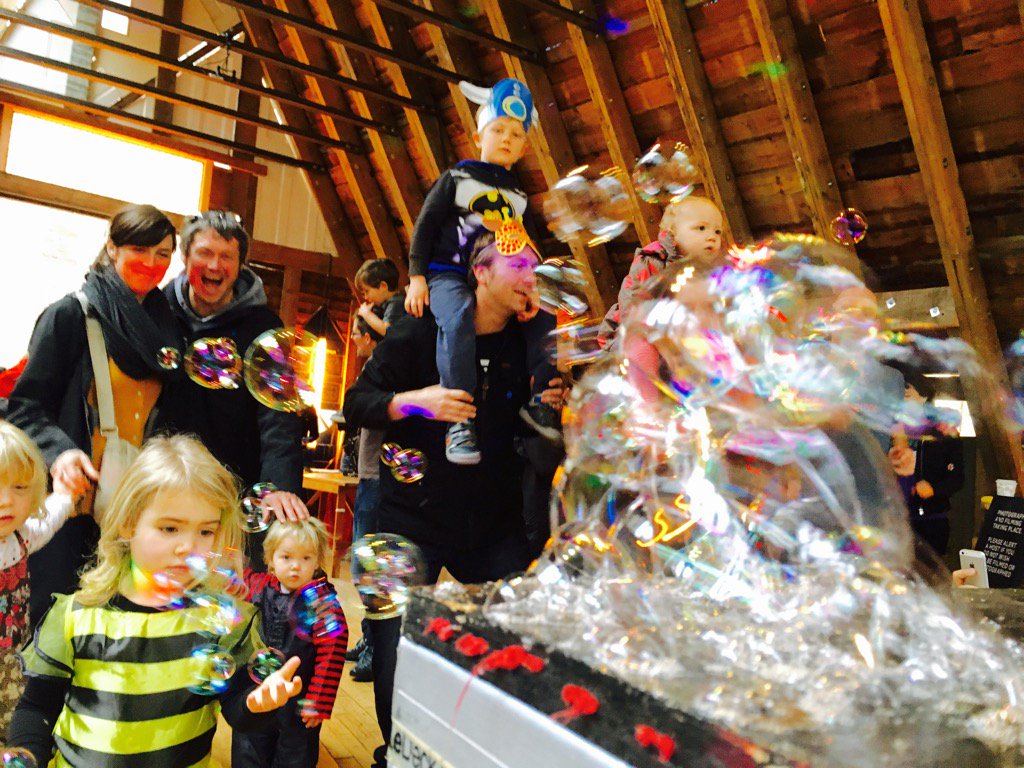
Photo credit: Anthony Ward, courtesy of Situations
There’s a long queue, because it’s Friday evening. That’s Ladies’ Night, when girls are admitted free.
“I don’t know why you wanted to come here,” Suki grumbles. “It’s a meat market.”
“Exactly,” Louise says. She preens, imagining herself a predator as she checks out the talent lining up ahead. Even Suki’s sharp glance doesn’t turn her towards a different truth. Females predominate on Friday nights; soft, vulnerable prey for the choosy males.
The black-clad bouncer glares at them. He’s sturdy as a cliff. The only clue he’s human is the lack of vegetation. “What’s your date of birth?” he growls.
Louise hastily subtracts two from the real year, so she appears eighteen. He glowers, then flicks his thumb towards the door, letting her through.
“There’s Danny,” Suki says, eyes shining. “I hope we get engaged soon.” She’s made the same comment to Louise every day since Danny left school and joined the army. He travels the world and Suki wants to go with him. She brushes off remarks about the countries Danny visits being dismal places where she wouldn’t want to live, and most likely wouldn’t be allowed to.
Danny had complained about clubbing on Friday night, apparently, but he seems happy enough now as he chats with his friends. Their eyes rove around the room, enjoying the sights of Ladies’ Night. Nevertheless, Danny meekly ambles over to the girls when he spots Suki. “Drinks?” he asks.
Suki requests a vodka shot.
“Same for me, please,” Louise decides.
Danny returns with a tray of shots and a beer for himself. His mates cluster round.
“This is Simon,” Danny says, gesturing to a tall lad with protruding teeth.
“He isn’t spoken for,” Suki says in an overly loud whisper that seems to echo across the dance floor.
Louise shrugs. Even ignoring the teeth, she doesn’t want to be an army wife. There are other ways to escape the dull town of her birth. Working at her A levels and going to uni hold more appeal.
“The poor girl’s blushing,” Danny says.
Louise necks a few shots fast. They’re the lurid colour of boiled sweets and taste that way too. Cocooned in the pleasant fuzziness of alcohol, she’s enjoying the company more.
“Are you dancing, Dan?” Suki asks.
He grudgingly leaves for the dancefloor with her. His other mates melt away until it’s just Louise and Simon.
“May I have the pleasure?” he asks with a goofy grin.
Louise sighs, knowing where that will lead. When the slow dancing begins later, he’ll have his hands all over her and his tongue down her throat. She shudders, but she’s about to say “All right” anyway. The bright lights, bubbles and beat of the dance floor are all tempting her even though Simon isn’t. Just as the words grudgingly emerge, another youth catches her eye.
He looks away, but it’s too late. She’s made up her mind. This one’s fit. He’s a tall lad with a tan and a short beard, black as night, standing quietly at the edge of the dance floor. There’s a purposeful quality about him. She likes that.
Louise risks a wave. To her dismay, he blanks her, strolling away. He leaves a leather satchel next to the dance floor.
Careless, she thinks, but what a useful excuse to pick it up and follow him.
“Don’t touch it,” Simon says sharply.
“Why not?”
But Simon’s off, running after the intense young man, grabbing him and bringing him to the ground. Danny reacts just as quickly, diving towards the bag, which he touches with the utmost gentleness, his face a picture of concentration. Louise sees the wires poking out of the bag.
She really ought to tell the DJ, but Suki has already done it. The fire alarm is sounding.
“Come on,” Suki pushes Louise towards the door, her voice scarcely audible above the shrill wail. It’s far louder than the disco. “We’ve got to get out.”
They shiver in the cold with the other clubbers, unable to retrieve their coats.
“It’s a false alarm,” one girl complains, ample flesh on display covered in goose bumps. She subsides into sullen silence as police and firemen arrive.
Danny and Simon emerge with the girls’ coats.
“Want to go on somewhere?” Danny asks.
“Oh yes,” Suki says, gazing at him with adoration.
Danny smiles back. She may yet get a ring on her finger, Louise thinks. Who wouldn’t want to be worshipped?
“How about you, Louise?” Simon asks.
Louise shrugs. She still doesn’t fancy him. Should she take one for the girls? She decides better of it. He’s the hero of the hour, so he’ll have hordes of women chasing him once the story’s out, anyhow. “No thanks,” she says.
They walk her to the taxi rank before heading to the next club. The DJ’s standing in front of her. He’s gorgeous too; all the girls think so.
“You were at the club, weren’t you?” he asks. “Fancy coming round to my place for a coffee? I’m still wired.”
He must have spotted the hope in her eyes, because he adds, “Just a coffee. I’m gay.”
Louise shrugs.
“My brother isn’t,” he says, grinning.
“All right,” Louise replies.
AA Abbott is a British crime thriller writer, who has written three full-length novels. Her latest, The Bride’s Trail, is available to buy from Amazon.
The Healers
By Richard Kemp
Reaction to Soulroots Acappella performing at 1:00pm on Sunday 15 November 2015
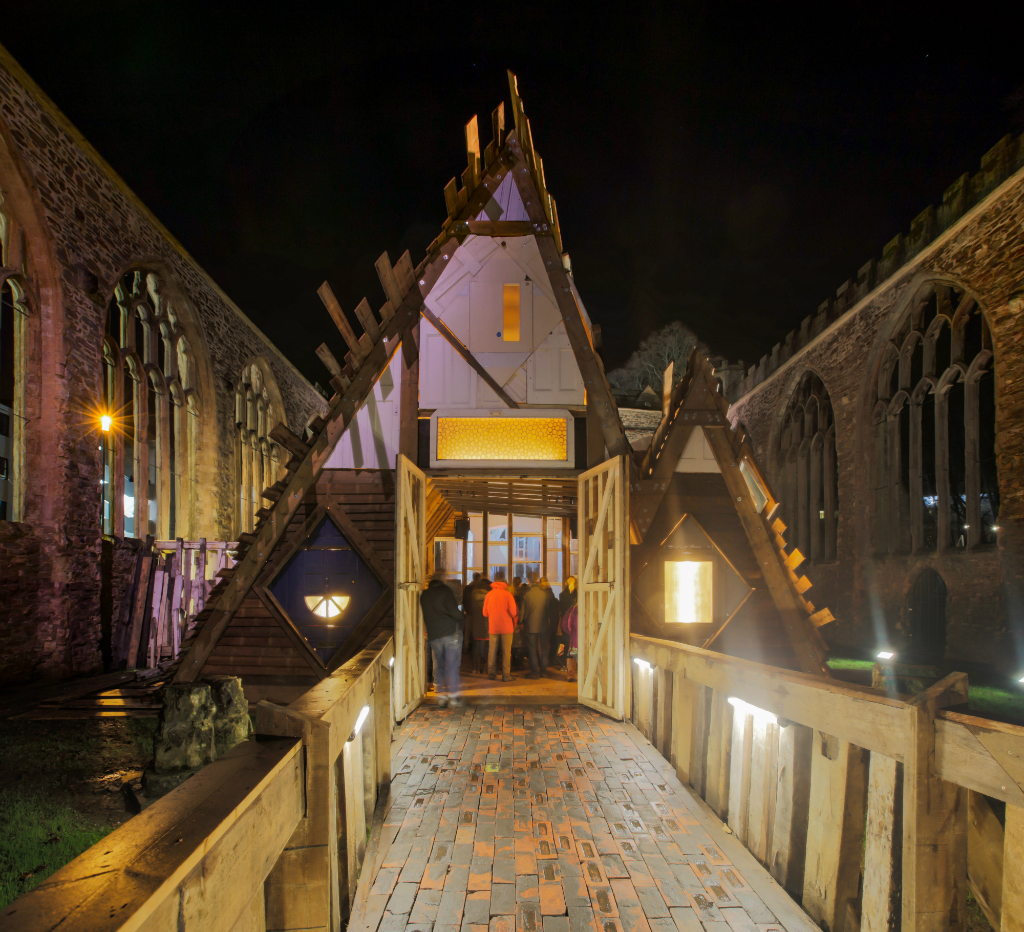
Photo credit: Paul Blakemore, courtesy of Situations
I lay at the side of the road, feeling the sun’s heat toast the back of my neck. My eyes weigh heavy with sweat, so puffy that I can barely see straight. I feel my way around, grasping at dirt and scorched grass, and try to stand, but stumble and crash down face first.
The blinding sun shows me a white figure with blonde hair. I wonder if I’m seeing an angel or still drunk from the night before. Then she offers her hand and I take it.
As I find my feet, I become wary of my appearance; straggle-haired, dirt-faced, looking like a man far beyond my years. She probably thinks I’m homeless. I want to explain that I’m just in a bad spot right now, but no words come out. She starts walking into the shady woods nearby and, for reasons I still don’t understand, I follow her.
We walk for half an hour, the angel silent with me trailing behind her like a lost puppy. “Where are we going?” I think to ask, but then decide against it, somehow knowing that I would not receive an answer.
The shade from the trees grows darker as we walk and I feel a sweat tickle my forehead. The humidity heaves its way in and out of my lungs, leaving me breathless and exacerbating the headache that comes with my week of indulgence. The forest is dense with glistening foliage, full of birds and reptiles of all sizes and colours. A symphony of chirps and bleats and shrills has erupted around us, rising to volumes that threaten to deafen. Croaks and rattles and hisses grate against high-pitched birdcalls, leading me to pick up my pace, though to where I still have no idea.
My eyebrows are soaked with sweat, as is the entire back of my shirt. I see steam rising from the ground and figure we must be getting closer to the bayou. Fears begin to creep up on me as to what this angel really wants, and why I was so willing to go without question. Had things really got that bad? Would I have just gone off with anyone? I look up to see that the shadow of trees has withered into light, revealing a lonely wooden house with muddy windows and a chimney billowing white smoke. The symphony of noises has been replaced with the thrum of a single song, though no song I’ve ever heard before.
I look back to the angel and catch her eye to see her break into a wide smile. “This is it,” she says and opens the thick wooden door for me to step inside. The house doesn’t look much from the outside – rough frame, slimy wet walls. The inside doesn’t offer much more – some old wooden beams here, a few rotting floorboards there – but as I cross the threshold, I feel a warmth that glows from its centre.
The walls are lined with a choir of singers, bellowing to a group of people. They are sat in the middle, facing every which way, like dishevelled patients in a doctors waiting room. One of the singers smiles and motions for me to sit. I take a seat as far from the centre as I can, fearful of what might happen otherwise. A glass of water is placed in my hands, which I sip with caution – at least at first while I survey the rest of the group. I see just how tired and filthy everyone else looks. I am disgusted at first, but then remember my own appearance is far from pristine.
The choir grows louder, their song crescendoing like waves of the sea. I watch everyone around me: some with their heads down, others talking to themselves. One man stares at the ceiling while a woman next to him quivers into floods of tears. I feel trapped and afraid, yet somehow loved. The circle of singers pulsates toward us, each angelic voice praising the ground below us and the roof over our heads. There are calls to God and thanks to Earth, and as their power grows, my thoughts turn to my wife. My baby boy. His confused face the day I decided to walk out on him for good.
I feel a tremble in my lips but refuse to give in. A hand grips mine and I turn to see a young woman. No older than 20, though she seems haggard with wrinkly eyes, puffy face and long greasy hair. Her skin is deathly pale. Her eyes lock onto mine as the choir explodes in volume, their harmonies reaching the tops of the building, reverberating about the windows and up through the chimney. It is so loud now that the house feels like a jet engine preparing for lift off. The sound wraps itself around me, holding me tight. The young woman leans in and cracks a crooked brown smile. “They’re healing us,” she wheezes.
The young woman lets go of my hand and turns her attention back to the choir. I hear another person start to blubber and see a border collie leap into an old man’s lap. A harsh wind picks up outside as the choir exclaims another joyous refrain. A refrain that I never want to end.
Richard Kemp is a journalist, published author and editor-in-chief of Kemptation.
Disassembled
By Judy Darley
Reaction to the aftermath of Sanctum, Bristol.
I’ll not forget the night
we rounded the corner to see
your cavern of light dismantled:
planks piled up, peak and windows cast aside.
A pensioner – part of a gaggle – veered towards us,
pressed a poppy-adorned paper into my hand,
asked if we’d join them to commemorate
the Blitz of Bristol. How oddly appropriate
in the wake of your soaring achievement
of song, spoken word, and shyness overcome,
the 24/7 of audible performance
filling the bombed-out church –
a space you had anchored with walls
and grace.
Judy Darley is a published writer, editor and poet based in Bristol, UK. Find more of her writing at SkyLightRain.com. Tweets at @JudyDarley.


 Kemptation