Author Archives: Kemptation editor

Unknown's avatar

About Kemptation editor

Bringing you the sweetest sounding and most body popping beats from around the world. Anything else is a bonus. Find Kemptation on Facebook or come say hello at kemptation.editor@gmail.com

Plain White T’s – American Nights

Originally published at kemptation.com on 14 April 2015. Words by Stephanie Yip

Released 28 April 2015 via Megaforce Records

There are bands that constantly evolve, altering their sound, content and get-up in line with what’s currently being digested on the charts. Then, there are bands that you can constantly bank on to remain exactly how you remembered them when you first laid your ears to their music so many years ago.

Plain White T’s is one of the latter.

After what seems like a lifetime of hiatus (their last record, Wonders of the Younger was released in 2010 before they entered a so-called ‘career limbo’) the five-piece pop-rock band has returned with their latest full-length, American Nights. And in case longtime fans are wondering, yes, it IS everything you remember the Plain White T’s to be: Poppy, energetic, romantically inclined and all-round fun. And as for the get-up? There’s nothing new here either, with all five original band members (from 2002 onward) returning for your listening pleasure.

The record opens with title track, American Nights. It’s a poppy love song that doesn’t take itself too seriously and does well to lift the spirits and the lungs, howling woooaaahhhh into the star-filled sky right unto the very last. It’s a lead-up into something slightly more down tempo, but no less easy-on-the-ears.Bred from happy-fantastic land of feel-good ditties, Pause sings of slowing down, looking around, and appreciating what’s around you.

Never Working is probably one of the least memorable tracks on the record. There’s always one, I guess. It’s quite moot, a little repetitive and seems not to actually go anywhere (guess that’s why it’s not working?). On the plus side, it’s a short-lived number and is followed by a more fun and digestible one called Heavy Rotation. Welcome something flirtatious and cute. And, in true Plain White T’s style, is not-so-secretly also an ode to a girl that singer Tim Lopez is puppy-dogging over. And while it pales in comparison to the band’s breakout and biggest hit, Hey There, Delilah, it’s still very much a contender for an upcoming single.

The halfway point brings on the slower ballads – another area where the Plain White T’s shine, and they do so grandly with Stay. Calling out to that girl, it pulls on all the emotions of the predominantly female fan base, with vocalist Tom Higgenson calling out for one more chance with the love he’s losing. Finally, there’s the standout ballad, You Belong. Again, it’s another love song that finds Higgenson serenading that perfect halo of a woman, placing her on the pedestal of a goddess. Listening to it, it almost feels as though you’ve entered a reverse Taylor Swift music universe, where all that rings across the airwaves is divine worship, as opposed to hateful revenge.

And just like that, the Plain White T’s crank up the energy again for a rollicking, fist-pumping medley of daydreams and romance, the kind that you can imagine spinning around in circles to until you’re dizzily flopping onto the floor, smile permanently fixated upon your childish little mug.

While plain in tone and harmony, the saving grace for Someday You’re Gonna Love Me is in the lyrics. Inevitably, among the poppy haze and four-beat melody, what Plain White T’s has got down to a, well, you know… (T), is their ability to reach out to the ladies and make them fall in love with them. With words. With romance. With a Mr Darcy kind of ultimate perfection. There’s this unmistakable air of euphoria that their lyrics, rife with conviction, induce that send women into an unbearable ovulating swoon. And the song’s sugar sweet somethings: “When we see things clearly / You’ll know I’ve loved you all this time / And I promise every kiss will be the sweetest of your life” might just send you there.

Love Song is another fine example of exactly what Plain White T’s does, only this time round, it’s a different kind of europhia – more giddy, less sentimental. Like sunshine on a rainy day, it’s the kind of ditty that lives in a tropical holiday or a 1980s video clip, where backup dancers sway and clap in tune with the music, smiles plastered onto their faces and Hawaiian shirts swaying gently in the breeze. It’s cheesy but oh-so-ridiculously fun.

Penultimate track, Time to Move On brings us back to the land of traditional pop, taking a page from Pause, it’s another lighthearted, positive song about looking forward, head-high and future bright and runs gleefully into the arms of the album’s closer: Here Comes That Sunrise. As expected, it’s another positive song about looking forward, head-high and future bright (repetition intended) with just a little more ‘oomph’ than its predecessor to really close off the record.

While nothing new, nothing progressive, and nothing compared to the success of Hey There, Delilah, Plain White T’s are everything you remembered them to be.

Welcome to nostalgia. Glorious, euphoric, pop-rock nostalgia.

Interview: Laibach

Originally published at kemptation.com on 17 March 2015. Words by Andrejka Zupancic

Laibach are one of very few acts truly deserving of the cliché, ‘more than just a band’. Formed in 1980, in the rural town of Trbovlje, Slovenia, Laibach became the musical arm of the Neue Slowenische Kunst (New Slovenian Art) collective, a group so radical that it would go on to found its own country, even issuing passports and opening embassies.

Laibach have influenced many great acts across multiple genres. According to Trent Reznor, if there had been no Laibach, it would be hard to ever imagine Nine Inch Nails or Rammstein coming into being.

Laibach, relevant as ever (or perhaps even more so), are currently haunting Europe with their eighth studio album, Spectre. We speak with the band about the new album, its message, the future of Europe and the concept of their international Party (you can’t leave the Party, apparently, but the Party can leave you).


You are currently on tour, promoting your album, Spectre. The lyrics have quite a political tone. What is the message of the album?

Spectre is basically a kind of ‘manifesto’ of the international Party, which we founded at the launch of the new album. There is an increased engagement in consciousness in Europe and elsewhere in the world – people are tired of the existing political and economic order and want to take power into their own hands and return the dignity and solidarity to social relations in ordinary life. In doing so, we can only support them and, in addition, we simultaneously try to return some political relevance and dignity into popular culture.

The entertainment industry should be fun (in the first place, at least), but it should also take its fair share of responsibility for the common social and political climate. Most of the popular entertainment industry today is completely trivialised and lost on all levels, particularly in the context of the basic issues of social justice and politics. One of the reasons for the establishment of a party is, therefore, also self-destructive; a cynical status in popular culture. Today, nobody takes music seriously, musicians and the music industry have gambled it away. But we believe that music can, in principle, still work as a mobilising force – think of all the brilliant periods in the history of pop culture – if it is not encumbered with itself, if it does not behave only as ‘music’, if it exits from its media and operates in the so-called ‘underground’, if it anarch-organises itself – not as a sub-culture alternative, but as a whip of God. Spectre therefore deals with this kind of content.

What is the purpose of the Party?

We established the Party as the classic ‘Stalinist’ international Party. It is available to all those who may be inspired by Laibach and who want something more than to just blindly consume ideas and objects. We do not want it to be a fan club; rather, we want socially and politically sensitive members who will actually engage themselves in their environments and connect and support one another (and help with other related projects), even remotely. We will also direct them a bit, so as not to get too mired in strange waters, but we will still allow them enough freedom, or at least its illusion.


You all have pseudonyms: Dachauer, Keller, Saliger and Eber. What do they mean?

Laibach works as a team, with a collective spirit, following the model of industrial production and totalitarianism. This means: no individual speaks; the organisation speaks.

The entertainment industry should take its fair share of responsibility for the common social and political climate.

Our work is industrial, language is political. The internal structure works on a directive principle and symbolises the relationship of ideology to an individual. The members of Laibach, since 1982, are Eber, Saliger, Dachauer and Keller, making a quadruple principle which, predestined, conceals any number of sub-objects (depending on needs). The flexibility and anonymity of membership prevents eventual individual deviations and allows a permanent revitalisation of the inner life juices. Subject, which can in the process of work be identified with extreme position of contemporary post-industrial production, automatically becomes a member of Laibach. Others hold the status of colleague.

Where are most of your concerts taking place and do you have a favourite audience?

We do not discriminate between audiences – or, at least, we pretend not to. We are politically correct enough that we are willing to lie about this. Nevertheless, our favourite audience is one that most loves us or hates us; those are the ones that are most inspirational.

The group was founded in Trbovlje. Do you still come back and organise concerts in your hometown?

Yes, we do that on a regular basis, in part because we were banned in Trbovlje when the band formed in 1980. It was in 1990 that we finally performed there for the first time – and even then under the watchful eye of the police. But Trbovlje gave a sense of perseverance, humour, ruggedness and sophistication. It marked us, so completely and thoroughly, that we still return to this, the most beautifully ugly city in the world.

It wasn’t until 1990 that we were finally allowed to perform in Trbovlje – and even then it was under the watchful eye of the police.

This is a typical Slovenian trait of dark cynicism and scepticism, but people in Trbovlje, though they are subject to all the junk of social roughness, are actually very sensitive and good. Today, the city varies considerably and instead of mining, power plants and heavy industry, there are now sophisticated companies such as the software company Dewesoft, which makes software for NASA in the USA and similar. A new youth culture has emerged, too, which organises the radical sound and music festivals. A new avant-garde collective has also formed, which hosts an annual international festival of new media called Speculum Artium – a few days of the year in which Trbovlje transforms into Slovenian Ars Electronica. Guests, artists, scientists and theorists come from all over the world – and we, of course, imagine that this change happened partly thanks to Laibach.


In your song, Eurovision, you proclaim ‘the collapse of Europe.’ Do you have a vision of how much time Europe has left?

Europe, as we know it and want it to be, does not exist. It is just a fiction, a desire, an illusion. The Europe that really exists is an intertwined and interdependent system in constant disintegration. And it seems this disintegration is the only stable principle through which Europe de facto has always been established. This was the case in the past and this will probably be the future. We wish her a safe journey and hope someday Europe will span the territory from the Atlantic to the Pacific.

After the release of your new album you are again getting politically active. In the 80s, the British press described you as “the most dangerous band in the world”. Why?

We do not know why. It probably seemed inconceivable to them that there could be such a radically different interpretation of the world, so different from the vision offered by the British and Anglo-American pop-rock sentiment.


What are the similarities and differences between Spectre and NSK (New Slovenian Art)?

The NSK was established at its inception and defined as an ‘abstract organism, supremacist body installed in a real political space as a social sculpture, consisting of the body heat, spirit and movement work of its members’. It is open to all, without exception, who want to become its citizens. Therefore, we left the country to its citizens, to organise themselves in any way they know how.

Unfortunately, nothing significantly different came out of it than just a kind of Laibach-ish. The NSK fan club was all about being some kind of artistic installation and trying to be to be more papal than the Pope. Therefore, we decided to establish a Party that would require from its members a specific social and political engagement and, therefore, give them specific tasks. Party membership is open to anyone to whom Laibach can serve as an inspiration and a formal link with like-minded subjects around the world – and we ourselves will be the ones conducting the Party.


In all your years of existence, who has tried to censor you most?

Ourselves. If this was not the case, today we probably would no longer exist.


What are your plans for the next album?

It exists, and we will start getting more involved with it, intensively so, in the second half of the year. But, for now, it is still too early to talk about it.


SPECTRE DIGITAL DELUXE ALBUM & SPECTREMIX OUT 30 MARCH 2015

UK Tour Dates:

30 March – Brighton, Concorde 2
31 March – Glasgow, Classic Grand
2 April – London, Electric Ballroom
3 April – Manchester, Academy 2

Inspirational Study Music

Whether you are studying for an exam, working through piles of research or just looking for a calm spot to read a book, music can make all the difference.

The right record at the right time can take your creativity levels from good to spectacular. You can’t just listen to anything, though – in fact, different sounds bring about different results.

Whatever you’re studying for (school, university, art college or night school), you need a soundtrack that works. And that’s what we’ve tried to make with this latest mix.

So put the kettle on, find a comfy chair and lose yourself in some inspirational study music.

Track breakdown

http://quietus_production.s3.amazonaws.com/images/articles/8659/glass_1335639714_crop_550x550.jpg

Philip Glass – Glassworks

It’s meditative and hypnotic, almost dream-like, and also really uplifting – something I need in times of hard study. MG


Lusine ICL – Language Barrier

Largely beatless album of gently-pulsing electronica which comprises washes of synth, some treated, looped guitar and twinkly bits while managing to sound simultaneously melancholy and euphoric. A warm bath of a record that grows with every listen. JC


Faures – Continental Drift

Imagine being being cast adrift in space, like the scene at the start of Gravity. Except instead of panicking, like Sandra Bullock does, you are deeply relaxed and witnessing something cool like the birth of a star, from a safe distance. That’s what this album sounds like. Nothing much happens, but then space is like that, I guess. JC


Explosions in the Sky – Those Who Tell The Truth Shall Die, Those Who Tell The Truth Shall Live Forever

A regular pick in most study lists, but for very good reason. Listening to Explosions… is like transcendence for the ears. RK


http://s3.amazonaws.com/typerecords_site/covers/255/type055_cover_med_medium.jpg

Richard Skelton – Landings

A good remedy for overworked brains! 

MG


Mountains – Centralia

Mountains‘ third album combines live instrumentation with vast walls of drone-like electronic noise. When I am trying to plan a lesson in a staff room full of chattering teachers this is the album I listen to. The record has a certain post-rock sensibility, demonstrated during the 20-minute long Propeller, which slowly builds to a crescendo of noise, before climbing back down again. Awe-inspiring stuff. JC


Susumu Yokota – Sakura

Japanese producer Yokota‘s early 90s ambient masterpiece combines loops of live instrumentation with vocal chants and lush synth work. Sakura is minimal, hypnotic and calming, and seems so much more than the sum of its parts. This is your best bet if you really need to concentrate. JC


A Winged Victory for The Sullen – ATMOS

Written to accompany a dance performance. I guess you would call this modern classical music. ATMOS is pretty serious stuff, but it’s also beautifully realised and profoundly moving in parts. JC


The Cinematic Orchestra and London Metropolitan Orchestra – The Crimson Wing OST

The only Disney soundtrack you need in your life. The Cinematic scores a nature documentary about pink flamingos, and the result is a rich, emotional, tour de forceJC


Jon Hopkins – Asleep Versions

Hopkins here produces stripped back, lush, ambient versions of four tracks lifted from 2013’s ImmunityJC


Global Communication – 76.14

One of my favourite albums of all time and, in my my mind, the best electronic ambient record ever made. Also doubles up as a perfect ‘sleep’ album if you want to take a nap on a train/plane/bus. JC


Portico Quartet – Isla

These Bristol musicians create a mesmerising mix of jazz and ambient sounds on this, their debut album. The group get bonus points for featuring criminally underused instrument, the ‘hang’. Some of the tracks include pretty crazy improv solos, so perhaps better suited to accompany creative work – abstract painters would love it.


Poppy Ackroyd – Escapement

London-born musician and composer Poppy Ackroyd coaxes beautiful noises from her piano in an unusual way; plucking or scraping the dampers and strings inside, or even taping the frame. She then records violin and multi-tracks the individual sounds together on her laptop. The result is delicate, ethereal, complex, and surprisingly accessible.

Generation Ill: Meet the New Vanguard of Scottish Hip Hop

Originally published at kemptation.com on 15 September 2014. Words by Michael Gardiner

Loki got it right when he described his native Pollok as his lyrical “muse.” Situated in the southwest of Glasgow, the housing scheme’s reputation is well documented: high unemployment, gang violence, and below-average life expectancy; topics ripe for harrowing and compelling prose. “Whether you want to be poetic or political, there is lots of subject matter to wade through as a writer when you are sitting staring directly out onto Glasgow,” said the veteran rapper, journalist and community activist, arguably one of the most respected voices in Scottish underground hip hop.

Loki’s songs are a constant, captivating struggle between the bleak, weary realism of the No Mean City and rich, poignant allegories that imply hope and change. It’s a love-hate relationship with the city, something most Scottish rappers can agree on. As John Lowis, aka, Louie, frontman of Glasgow duo Hector Bizerk, explains, “Language, accent and life experience are the main sources of inspiration for hip hop anywhere in the world. Identity is more prevalent in hip hop than any other genre, so it makes sense that people are proud of where they are from.”

It’s strange then, that Scottish hip hop has struggled for years to gain the mainstream acceptance that its American counterpart has basked in. This is generally speculated to be down to accent; in the same way that Trainspotting was dubbed for Americans, the vernacular used by MCs was thought to be simply incomprehensible to audiences outside of Scotland. It was treated as a joke. People like the Burberry-wearing, Buckfast-swigging Wee Man became YouTube sensations from ripping the pish out of it.

In the last couple years, though, the story has started to change. A handful of tight-knit artists are bringing a new dawn to the scene. For Ciaran Mac, a 21-year-old MC from Cardonald, hip hop in Scotland has taken on a life of its own. “I think it’s important to use your own accent and local slang,” he says. “The days of feeling like you have to rap in a different accent are long gone.”

Indeed, Mac makes this clear on his debut self-released EP, Took Your Time, where he spits multisyllabic rhymes over lush, atmospheric beats reminiscent of 90s jazz rap. The effect is jarring yet brilliant – boom bap torn from its NY roots and replanted on a Glasgow council estate. ‘Cat’ becomes ‘C***’, ‘Whack’ becomes ‘Pish’, the popo; the ‘screw crew’, the gat; the knife. “People are more open to listening to hip hop in their own vernacular nowadays,” he continues. “Scottish hip hop is more popular than ever at the moment.” In regards to using the C word: “that’s just a Glaswegian/Scottish thing, and in hip hop wherever you’re from people will use words and phrases that are just regular to them which might get misinterpreted by listeners from different cities and countries.”

Mac fell into the hip hop scene “by accident.” He’s been writing rhymes since he was very young but only began to perform live when he was 18 after meeting Mark McGee of Glasgow band The Girobabies. “I kind of got pushed into this scene as a really under-confident, stage shy MC who never wanted to be the centre of attention or anything like that,” he explains. “I got talked into rapping in front of Mark and he was impressed. From there, he dragged me up on stage to perform impromptu with his band a couple of times and I found myself then pushed into the Scottish hip hop scene.”

And what a diverse and colourful scene it is. No wonder, given that it’s practically compulsory for any self-respecting new band to pull together dizzyingly idiosyncratic sounds. Take the ballistic tribal chants of Young Fathers, who recently won Scottish Album of the Year for their Anticon sophomore Tape Two, or the synthetic satire of Stanley Odd (last year’s nominees). Or perhaps you’d prefer another Auld Reekie street poet, Madhat McGore, the schizoid mash-ups of Dundee’s Theholyc, the neon synth hooks of Aberdeen’s SHY & DRS, or the murky sampledelica of Inverness’s Paul Scotti. Then there are old hands like MOG, Gasp, Mistah Bohze and, of course, Loki, who will be taking his new project, Government Issue Music Protest (GIMP), around the country this month.

With platforms like Soundcloud and Bandcamp, the millenials who comprise the majority of the Scottish hip hop scene have the opportunity to share and distribute their work worldwide. For good or ill, this techno maelstrom has ushered in a new age of DIY ethics, of being able to succeed on one’s own terms. Of course, the genre has always been about support, too. “There are so many other ways that Scottish media could help our scene grow,” says Jay McLeary, co-owner of Edinburgh record label Music Comes First, home to Madhat McGore among others. “I think until the fan base of Scottish artists is at a point where the media can no longer ignore the artist, many artists will need to continue that struggle to get maximum exposure.”

Ciaran Mac also believes that the scene deserves more media attention. “Most people I come across, who listen to Scottish hip hop, really love it; it’s got that kind of Marmite effect,” he says. “So if there was more attention, then hopefully it would create more big fans of it which would only be positive. It’s good to know, however, that Scottish music journos and bloggers are starting to accept it as something serious.”

But why now? “Maybe with the current political climate, people are more open to hearing hip hop in their own vernacular,” says Hector Bizerk’s Louie. “If the general public are more open to the idea of discussing local, regional, and national matters in everyday conversation, then hip hop culture is the perfect fit for them as guys like myself, Loki, Gasp, Mistah Bohze have been discussing for years through song.”

Louie, along with drummer Audrey Tait, formed Hector Bizerk back in 2011. In the three years of their existence, they’ve supported the likes of MF Doom, GZA, and The Libertines, and have performed in New York to critical acclaim. With their second album, Nobody Seen Nothing, making the shortlist for Scottish Album of the Year, the duo’s lean, stripped-down take on hip hop is getting heads turning everywhere. “When we were in New York earlier this year the reaction was incredible,” says Louie. “We recently played a festival in Ireland, too, and the tent absolutely erupted a couple of songs into our set. It’s hands down the best response we’ve had away from Scotland. A girl took her knickers off and threw them at me after three songs. At the end she came up and asked me for them back!”

The duo has even been championed by hip hop pioneer Grandmaster Flash. Louie fondly recalls meeting the legend for the first time: “We played with him in Glasgow and the show wasn’t very busy. He stood and watched us and came into the dressing room afterwards and said he really liked the set. He asked if we had any albums and Audrey handed it [Drums. Rap. Yes] to him and said, “That’ll be a tenner!” He laughed, and Audrey told him to get his hands in his pocket. He did. So he bought our album.”

Although stateside rap casts a long shadow over music UK-wide, most artists working in the Scottish scene will look to their peers first for inspiration. “It’s good to talk about things that are familiar to local listeners,” says Ciaran Mac, who cites Penilee rapper, MOG, as an influence. “I like a lot of his songs where he’s talking about things I grew up doing and using patter only really familiar to my area.” MOG’s songs tackle current social issues like alcoholism and underage sex, but are not merely a depiction of his surroundings. His lyrics serve as a caution to youngsters led astray: “Stay off the corners, son; enjoy your life before it’s done,” he urges on the track Grafter. For those trapped in the chasm of urban deprivation, hip hop represents the possibility of escape, a means of expression that no other musical form can justify. It’s unsurprising that so many Scottish kids talk of how hip hop “saved them.”

The genre has always been evocatively responsive to the events of its time as well. It came of age during the country’s Thatcher-induced economic blight, and it is believed that the first Scottish hip hop record on vinyl was an anti-poll tax anthem: Demonstrate The Mass by Edinburgh’s Sugar Bullet, released in 1990 (remember, The Iron Lady introduced the policy in Scotland a year before England and Wales). Now it’s a different generation, with a new set of problems, living under a Westminster government that’s hell-bent on finishing what she started. “Your style’s dead like Maggie Thatcherism,” raps Ciaran Mac – or is it?

This new breed of twenty-somethings recognise that hip hop can be a crucible for exchanging social and political ideals, gleaned as much from experience on the scheme as a headline in The Herald. Everything, from Tory cuts to the bedroom tax, from MP pay rises to voter apathy, is fair game. They’re realists and futurists, always thinking about tomorrow. And when discussing our tomorrows, the question of Scottish independence is unavoidable. Indeed, members of the scene are not shy when it comes to voicing their political sentiments. “I am completely behind independence for Scotland,” says Jay McLeary. “It is something several of us in the Music Comes First camp feel strongly about.” He does not, however, believe independence will have an impact on music and culture: “People from Scotland are not all of a sudden going to just listen to Scottish music because independence is granted. So the same struggles of receiving attention from England, Wales and Ireland will continue.” Mac is also a passionate ‘Yes’ man: “Since the birth of hip hop, there’s always been artists speaking out about oppression and such, so it’s no surprise that the majority of the Scottish hip hop scene are behind an independent Scotland in hope of a fairer society in future.” When asked about his feelings on the matter, Louie simply replies: “Confident.”

Regardless of the outcome on Thursday 18th September, hip hop will continue to flourish in Scotland and beyond, as some of its brightest acts have already proven. McLeary reflects on the scene’s growth: “In 2009, when MCFR started, although there was a certain scene it was very closed and almost everyone knew everyone. Now, however, there are so many different branches forming that it makes it difficult to keep up to speed with everyone.”

But there is an undeniable shared aesthetic here, an abundance of artists who are representing Scottish national, ethnic and cultural identity. Once regarded as a derivative phenomenon of stateside hip hop, it is now recognisable through its own distinct expression – raw, cutting and memorable rhymes gloriously liberated from the homogeny of the English language.

Interview: Josh Scogin and Michael McClellan of ’68

Originally published at kemptation.com on 20 August 2014. Words by Simon Gore

Globally established and respected mathcore band The Chariot decided to call it a night while on the 2013 Warped Tour. Once the collective decision had been made, and prior to any public announcement, vocalist Josh Scogin contacted his long-time friend and music producer Matt Goldman to book in some studio time for December that year. When Goldman asked what this time was for, Scogin replied simply, “honestly I have no idea, but I will have to know by then.”

Scogin was sticking with music, that much was certain. And so, unable to just sit around, twiddling his thumbs, he spent the following weeks and months letting ideas snowball in his mind. “It was when I decided that I wanted it to be a two-piece that it fell together,” he says. Having been a member of five-piece bands his whole life, this concept gave a new lease of creativity and enthusiasm to Scogin: “It was like I had a puzzle and that was the edges; other stuff fits in now. I think that just comes from wanting to completely flip the script.”

Sometime during the autumn of 2013, Scogin called on his friend Michael McClellan, a drummer who worked in the same studio that Scogin’s last band frequented. “We met about five years ago and stayed in touch,” McClellan explains. “If Josh was producing someone else and needed some drum tracks, he would call me up. He has seen me play a couple of times with different projects. We became friends, started hanging out. Once Josh wanted to do a two-piece band, he gave me a call. We met at a burrito place and sparks flew; he had me with the burrito.”

Scogin and McClellan hit the studio and started work. Hitting their own deadlines under pressure proved to be the chemistry this young project needed: “I mathematically made it something that had to be a little impulsive and spontaneous,” says Scogin. “The Chariot did our last show at the end of November and within December we were writing and recording the ’68 record”.

’68 display undisputed realism in their composition, philosophy and live performance. This comes from both Scogin and McClellan, neither of whom wanted this new project to be about simply pushing a space bar on a laptop: “As kind of an old-school thinker, it bums me out,” Scogin admits. “I get it when it’s big timers, people who are a glorified Broadway act, that’s fine. But the fact that it’s leaked into the punk rock world and the underground scene is weird to me. Convenience will win every time when you’re talking about an average or a general public, but I enjoy the human element. I enjoy a little danger.”

This mentality remained a prominent feature throughout the recording process. Wanting a live and genuinely authentic sound, Josh began experimenting with Matt’s vintage amp collection, some of which were more unreliable than others and begged the question of whether they would power up at all. But this beautiful spontaneity and experimental attitude are what give this duo such character. The guitar sound on a lot of the new record is from an old amp at its breaking point, driven harder than intended after being dragged out of retirement. This lead to inevitable casualties: “any time something is breaking or falling apart we tend to enjoy that and somehow put it on the record, because you can’t duplicate that. It’s real life. Now, some of them don’t work.” This Hendrix-esque, sacrificially artistic beauty is rarely seen in modern music.

In the live environment, equipment failure was not an option and so Scogin went to custom amp builders Paul & Mills, who constructed him an A-cab from a 1×12 combo with a 3×15/1×12 B-cab to provide the low end. This boutique gear, however, stays on American soil, as ’68 have been touring Europe with their road partners In Archives, instead using their backline and drum shells.

Touring as a duo certainly has its pros and cons. Making a collective decision on a suitable eating location takes seconds – there is more room in the van and never too many cooks in the proverbial kitchen – but what ’68 lack in members they certainly make up for in equipment. Loading means just the two of them and they use enough kit to satisfy a five-piece band.

The fresh musical direction has inevitably welcomed a new audience and touring network. The pair have been able to play with new, impressionable bands, many of whom, such as Memphis, Tennessee’s Starkiller, may not have been considered for a promoter’s support act go-to list during The Chariot days. Touring hotspots, meanwhile, remain the same, the best receptions coming from Dallas, Texas and Columbus, Ohio. Atlanta, too, though since this is the home turf of these two, exceptional crowd response is unsurprising.

The duo’s debut album, In Humour & Sadness, is out now. People will always make the connection with the past works of these musicians, but ’68 are an authentic, eclectic team in their own right. It’s good, old-fashioned, brand new rock ’n’ roll played by real human beings.

They are touring, working and collaborating with industry friends (like Daniel Davidson, who just shot their new video for R), but for Scogin and McClellan, they are simply enjoying each other’s company and look forward to whatever the future may bring.

Here’s a challenge for you:

Line up the two videos below to get a single, synchronised track from the ’68 boys. It’s like the Dark Side of Oz, only it actually works!


Interview: The Wonder Villains

Originally published at kemptation.com on 01 July 2014. Words by Stephanie Yip

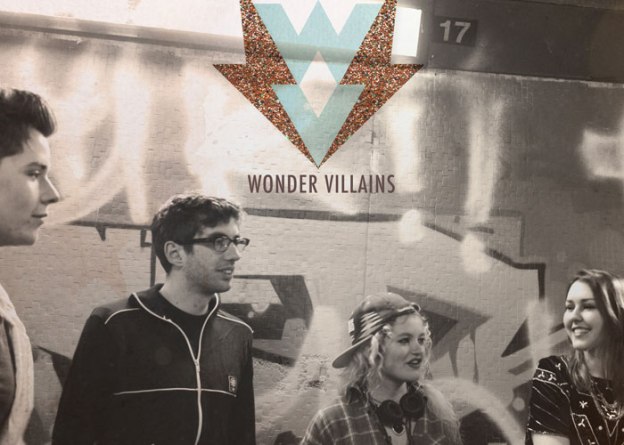
They might be young in age, but Derry City’s The Wonder Villains are by no means new to the music circuit. Although officially having formed around the 2008 mark, the band’s foundation can, in a sense, be pinned to the summer of 2006 when sister and brother, Eimear and Kieran Coyle, joined forces with five of their cousins to write and record a bunch of covers (plus one original about the weather. Errr-?).

Summer ended and, with it, so did the band. “That was just something we did for a bit of fun,” says Eimear. “I don’t think the rest of them are rockers at heart.” But she and her brother were. And with that in mind, Eimear went on to form pop outfit Damn Fine Coffee (with current Wonder Villain Cheylene Murphy) and Kieran continued playing with his school rock band, Organized Confusion (with current Wonder Villain Ryan McGroarty). Well, you can imagine what happened next.

The two bands split.

Eimear and Cheylene formed The Wonder Villains, and a number of Battle of the Band competitions later (some wins, some losses), and Kieran and Ryan joined the group, completing the current line-up. “I guess we should always have known that we’d end up being in a band or something,” says Eimear. “We’ve always got on really well.”

They obviously still do as, on 23 June 2014, The Wonder Villains became the proud owners of Rocky, their first full-length record.

It’s a 12 track-strong energetic spinner of party-pop proportions with fun-loving songs about everything from superhero characters to football stars. The cover art glitters in pink and gold, featuring The Wonder Villains’ logo as though it were a superhero’s calling card (maybe it is?). Their outfits on and off stage read much the same, toeing the line between bright and colourful and costume, and their personalities and on-stage presence are likewise. “If each of us had different friend groups, we’d all probably be the most positive, excitable ones,” admits Eimear. “We pretty much just have a laugh and believe that anything is possible.”

Including having ex-Chelsea FC star, Gianfranco Zola star in your music video.

The Wonder Villains may be young, but they’ve quite a lot of extraordinary moments to brag about. Their debut on the tour circuit was opening for fellow Irish outfit General Fiasco to crowds of thousands; they’ve played The Great Escape and Dot to Dot, seen Bono backstage at Electric Picnic (“He looked right at us”, glows Eimear), and lived the childhood dream of getting to run amok in Northern Ireland’s Barry’s Amusements for the music video of their single, Marshall. Now, in some strange form of serendipity, their football hero, Gianfranco Zola, has starred in one of their video clips.

Originally released in 2011, Zola is the psychedelic dance-pop third track on Rocky and hails the glories of its namesake. After uncovering a fan’s YouTube clip, which soundtracked snippets of his games with the song, Zola agreed to star in its rerelease.

What next? Well, they do have a single called Marshall that features pink speakers as its cover art. “If a certain amplifier company of the same name want to make this dream [of touring with said speakers] a reality, then we will fully endorse it!” Eimear exclaims. Pink speaker cuteness aside, the album’s artwork has gems to look out for, too. “The inside sleeve is the best bit,” concludes Eimear. “It’s a collage of classic snaps we’ve taken over the last few years.”

Now, we haven’t seen said collage yet, but if the band’s Facebook album is anything to go by, it’s going to be pretty epic. “Social media is a great way to get the word out and make people smile with our ridiculousness,” jests Eimear, who secretly knows we’re referring to the band’s hilarious photobomb of that Oscar’s selfie.

“Kieran played The Undertones’ drummer in the BAFTA nominated movie Good Vibrations,” says Eimear. “He dyed his hair blonde for the part, had two lines, and his head was in the clip they played on the big screen at the BAFTAs. So naturally, after that success, we were invited to the Oscars and met Ellen.” Okay, so maybe they Photoshopped themselves into that selfie, but Kieran really did star in Good Vibrations and the invite really was in the mail.

Now here’s yours. Invite, that is, to listen to this “badass” (her words, not ours) debut record by The Wonder Villains.