Author Archives: Richard Kemp

Unknown's avatar

About Richard Kemp

Creative writing, music and things of interest. Editor at Kemptation and contributor to BCFM's Audiophiles.

An update from Kemptation

Well, every great ride must come to an end.

Kemptation started as a little blog in 2011. Back then, I couldn’t imagine us growing at all, but we eventually became a team of 40+ contributing writers, editors, photographers and videographers, each member bringing their own immense talent to the fold.

And now, sadly, Kemptation is dead, but the great work we created lives on in this archive.

Take a look through our music reviews, mixtapes, feature interviews and fiction writing. We did so much in the time we had.

We may return in some form or other – we haven’t decided yet – but for now this is it. I am so proud of everything we achieved.

Thanks for reading.

Richard Kemp

Editor-in-Chief, Kemptation


AWARDS AND RECOGNITION

Featured in Style of Sound‘s Top 100 Most Influential Alternative Music Publications in the World

Part of the Hype Machine and Tipping Point networks

Featured as ExFm Tastemaker

Twice optioned for The Printed Blog

Feature interview on MusicMagpie

Feature interview on Whyd.com

Interview: Kiran Leonard

Originally published at kemptation.com on 21 January 2016. Words by Richard Kemp

Kiran Leonard leapt into many people’s eardrums with his 2013 record Bowler Hat Soup and its infectious-yet-puzzling opener Dear Lincoln. Now, with an exciting new album, Grapefruit, peeking over the horizon, the multi-talented songwriter has the likes of BBC 6Music’s Marc RileyStereogum and The Line Of Best Fit telling legions of listeners just why his music needs to be heard.

Kemptation had originally planned to ask Leonard a few questions over email and work them into an interesting feature. It turns out, however, that it’s far better just to let the man speak his mind. In the interview, we cover popularity, language, song construction, David Bowie and the true reasons why artists make the music they do.

We first came into contact with you through Marc Riley playing Dear Lincoln on his BBC 6Music show. Since then, we have been avid converts. Have you noticed an increase in listenership over the last couple of years?

I suppose I receive more nice e-mails and messages than I used to. I try not to obsessively track Twitter mentions and stuff but it’s kind of addictive. Sometimes I get the urge to just go home, give my copy of Future Primitive a big wet kiss and bury all my hardware in the back garden.


You speak Portuguese and even sing in Portuguese on some songs, such as O Hospideiro. Do you find that you can express things in this language that are not quite possible in English?

I don’t speak Portuguese fluently by any stretch of the imagination – I can read it alright, but I still definitely have a long way to go. I’ve also never tried writing lyrics or poetry in Portuguese: O Hospideiro is a cover of a song by a friend of mine that I translated into wobbly Portuguese as a linguistic exercise. Sorry, that was a really boring answer. I’ll try again in my response to the next question.


You mention on the liner notes to your 2015 EP, Abandoning Noble Goals, that you admire singer Daniel Johnston’s ability to present exactly who he is through song, and that this is something you find difficult to achieve yourself. Does singing in a different language help with this at all?

Well, again, I have never released a song in another language that I’ve written, so I can’t answer that question directly. I think that every human being, regardless of the language through which they choose to communicate, is faced with the task of rendering intangible, deeply personal feelings into tangible, accessible speech. I mean in day-to-day life, not just in arty farty ‘confessional’ songwriting. Reading in other languages, whilst obviously as pleasurable as reading usually is, offers more incomplete solutions to a problem that is impossible to overcome. It’s helpful in the way that if you climb up a stepladder you’re probably a bit closer to the Earth’s outer orbit.


Your latest single, Pink Fruit, which was released in anticipation of your forthcoming album, Grapefruit, is a whole 16-and-a-quarter minutes long. David Bowie just did a similar thing. Who’s riding on whose coattails here?

Kiran_Leonard-Pink_Fruit_12_single.jpgI thought the noise surrounding that new David Bowie single was very peculiar for two reasons. First of all, it’s not new ground for him at all to write long pieces that eschew traditional song structure – you hear that his new record is going to be full of long, strange pieces and just think, “oh right, like Station to Station.” You get the impression that people were freaking out ’cause David Bowie had recorded the song, not because the song had been recorded… and that’s just sheer celeb idolatry rather than judging a piece’s innovative qualities on its own merits. In of itself, the song is territory covered by a huge number of artists before him and by Bowie himself.


Pink Fruit is an exceptional track, a whopping cavalcade of genre-busting anti-merriment. How did this song come about?

Initially the song was just that one riff in 7/8 that you hear nine times 12 minutes or so into the song for a quarter of an hour – then, I figured that would be really tedious. I think I wrote the last four minutes first, then the first four minutes, then the middle bit. The music and the lyrics came together over the course of a year or so.

I don’t think it’s anti-merry! I guess it’s not a very pleasant depiction of human beings. It’s got saucepans in it though, and they’re well merry.


We are looking forward to hearing your new material played live. Did you catch the Sanctum here in Bristol recently? A 24-hour live exhibit of sound for 24 straight days; hundreds of musicians and storytellers took part. Sanctum’s mission was to show Bristolians a new way of experiencing their city. How about with your music? Do you use sound as a way to cultivate new experiences for others?

Well, I mean, on the one hand musicians don’t have a responsibility to cultivate anything for anyone except themselves. I’m still in two minds about the idea of art as a selfless act. You mentioned Daniel Johnston; believe me when I say that what he has written has helped me immeasurably at moments in my life. But ultimately he’s doing it for himself. That kinda goes completely against what Andrey Tarkovsky said about his films: he didn’t believe in any of that, he was all about art being… about an individual trying to articulate their own truth of existence to a wider population in the hope that it will help enlighten them – to depict but also to transcend – but he’s no martyr, he did it because he loved cinema and because he wanted to find these truths for himself. You make art for yourself but if it lacks a certain resonance with other people then I think that affects its quality.

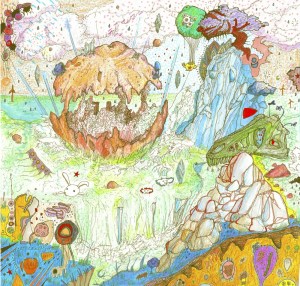
Kiran_Leonard_Grapefruit_album.jpgI’m trying to avoid a “oh I don’t know about that mate, I just write songs and if anyone likes them, then-” sort of answer, because I fucking hate that complete lack of responsibility with every fibre of my being. It’s pathetic and cowardly. It’s good to have an outlook on what you make with a mixture of thoughtfulness and modesty, and to try to find a way to assert a belief in the worth of what you’re making without turning it into something self-aggrandising. I take what I write very seriously but… yeah, I like the way Tarkovsky put it. There is a value in what I express because there is a value in human self-expression. Does that answer your question? Not really. Bristol’s great though, I hope I get to visit next year at some point. I’m in the middle of reading his book, Sculpting in Time, so that’s why I’m gushing about Tarkovsky. He can talk about the role of art to its audience with much more beauty and precision than I ever can, and I think his definition applies to him as much as it applies to anyone as much as it applies to me. So ye m8 don’t mind me u know just write sum songs init and if some1 else likes it then that’s a bonus m8, ye.


Kiran Leonard’s single, Pink Fruit, is available as a one-sided etched 12″ via Moshi Moshi. His album, Grapefruit, will be released on 25 March 2016.

Find out more about Kiran Leonard via TwitterFacebookBandcampTumblrSoundCloud and YouTube.

Interview: Elvis Perkins

Originally published at kemptation.com on 6 December 2015. Words by Richard Kemp

It was almost a shock to learn that Elvis Perkins would be coming out with a third studio album. Until 2015, fans would have been forgiven for assuming the New York recording artist was on indefinite hiatus. Perkins released his debut, Ash Wednesday, in 2007, with album number two, Elvis Perkins in Dearland, following just two years later.

And then, silence…

OK, silence is perhaps an overstatement, but not a single new album emerged from the Perkins camp in that time. The bare-bones folk of Ash Wednesday had gained Perkins the tricky moniker of “New Dylan” (no doubt for its gripping opener, While You Were Sleeping) while …Dearland saw him and his band combine their efforts to create an out-and-out group record; the result bearing exuberant choruses (I Heard Your Voice in Dresden) and wholly memorable sing-alongs (Doomsday).

Understandable, then, that the Perkins fan base wanted him back. They needed more; and in early 2015, the musician announced that he would be returning with his third full-length studio album, the now-acclaimed I Aubade, and a full US and European tour. It is before the show on the Bristol leg of this tour that Kemptation meets with Elvis Perkins to talk life, language and revolution.

Elvis Perkins has been through more than most when it comes to heartbreak. He lost both of his parents by the time he was 25: his father, actor Anthony Perkins, famous for playing Norman Bates in Alfred Hitchcock’s ‘Psycho’, to AIDS in 1992, and his mother, photographer Berry Berenson, to the terrorist attacks in New York City on September 11 2001.

Naturally then, Perkins has a lot to be sad about. This certainly shows in his musical output (he even named his first record Ash Wednesday in reaction to the aftermath of the attacks, which occurred on a Tuesday). And yet, as the conversation flows, Perkins seems content, satisfied, even…happy. He cracks jokes and dives into unanticipated tangents, bringing up far more interesting answers than the original questioning could ever have managed. This change in character is clear on listening to the new record, too. The album, I Aubade, is a far cry from the Elvis Perkins of old. “It’s the most genuine Elvis Perkins record there is,” he says, putting this down to the fact that he wrote and recorded the entire album alone, without influence from any producer (as with Ash Wednesday) or from the rest of his band (as with …Dearland).

Perkins had no management or label following the release of …Dearland and the subsequent Doomsday EP and so he decided to take his time with I Aubade, to make the album that he truly wanted. ‘Aubade’, French for the morning version of a serenade and the title word of Perkins’ album, came to him out of the blue. He was immediately struck by the word’s ambiguity; it also seemed to fit perfectly with what he was attempting with his music. “I had been aiming to make songs that would be for metaphysical morning time,” he says, and so ‘aubade’ seemed like a gift from the unknown (or at least the app store – he is not shy in admitting that ‘aubade’ came to him via a word-of-the-day alert on his phone).

“If you have any kind of audience, any kind of a voice, you must use it for good, whatever good looks like to you”

Perkins is fascinated with language. He fills his songs with plays-on-words and double meanings, something that he learnt from an early age. He makes reference to his father, who was a keen word player and a relentless pun maker. The UK loves its puns, which sets Perkins to thinking about his British ancestry. “I don’t know where Perkins comes from specifically in the UK, but we definitely had ancestors coming over. I think we had one on the Mayflower in fact, so maybe it’s a blood thing. They brought the puns with them over the seas.”

Many of Perkins’ song lyrics and titles also come from what he describes as a “slur of the hearing”. How’s Forever Been, Baby? was something he thought he had heard at a barbecue while Send My Fond Regards To Lonelyville comes from him mishearing the name of a neighbourhood in Providence, Rhode Island called Olneyville.

Perkins, as well as playing with words, likes to experiment with perception. His music often combines sad themes with catchy footstompers that take a few listens to realise what you are dancing to. When asked why listeners respond to this so well, Perkins is at first reluctant to place a finger on it, though eventually attempts an answer: “it must have something to do with the binary nature of existence,” he says. “The life and the death, the black and the white…If you can present something that breaks apart dichotomy by giving you both at the same time…you have maybe broken through some kind of divide that is only perceived in the mind.”

elvis_perkins-2015_02

While I Aubade is a personal record for Perkins, it has many more take-home messages for its listeners than its predecessors. Perkins believes that, as the Earth’s “self-appointed custodians”, humans are doing a poor job of protecting their planet and he is unafraid to sing about this. Album track 2$ is a wakeup call to any who believe in the power of the presidential vote. In the song, Perkins asks whether a Washington can redeem a Jefferson, alluding to the one-dollar and two-dollar bills and the fact that the real power and vote lies in where we choose to spend our money rather than what box we decide to tick on election day.

Activism is not the coolest subject for a songwriter to tackle – Michael Jackson and Neil Young are prime examples of this with their environmental calls to arms – and regardless of how imperative these issues are, Perkins has noticed some pushback. An audience member in Copenhagen had invited him and the band back to his place after a show. He was nice, says Perkins, but he also had no problems with saying exactly what he thought, even if it would ruffle some feathers. “He let me know that I had been preaching to the converted…it was difficult to not come across as an asshole. This was a fan of mine telling this to me.”

The experience in Copenhagen surprised Perkins and so began an internal battle between the side of his brain telling him he shouldn’t make songs like 2$ because they annoy people and the other side that saw it as his duty. Ultimately, he decided that, whether people want to hear it or not, his message is one which bears repeating over and over again: “if you have any kind of audience, any kind of a voice, you must use it for good, whatever good looks like to you.”

Tonight’s set includes a heady mix of classic Elvis Perkins songs – Doomsday makes an appearance, complete with marching bass drum, as does a heart-wrenching rendition (what other rendition is there?) of Ash Wednesday – plus many tracks from the new album. Pun-riddled jaunt Hogus Pogus gets plenty of laughs, with the singer recounting the tale of a man who has his heart replaced with that of a pig. New song Now Or Never Loves stirs the chuckles, too. Perkins and bassist Danielle Ackroyd play the will-they-won’t-they romantic couple, leaning in to each other and stopping short on the closing beat – “it’s a cliffhanger,” he says.

Perkins is clearly comfortable in his role as bandleader and stage performer. He recognises this himself, too: “I don’t know what happened in the past several years, but I enjoy the touring process much more than I did before.” When the band plays Slow Doomsday, Perkins encourages the Bristol crowd to sing along, calling with a grin, “we’ll let you know when your time has come, Bristol.”

“I believe that we need revolution if we’re ever going to survive and not kill off every other thing that inhabits the oceans and land and sky”

The band plays 2$ tonight as well, with Perkins introducing it simply as a song about spending your money wisely. Knowing the story behind the song and its shaky reception makes it all the more powerful when performed live. Instead of giving much preamble to this song, though, Perkins uses any available mic time to spread his love for all living things, reminding the crowd that we are all part of the same one world and that we’re all headed for the same place. He talks about second chances, too, something even the people who committed the abominable attacks in Paris on 13 November 2015 will receive. Spoken by anyone other than Elvis Perkins, this may have come across as naive, even thoughtless, but this is a person who has had more than his fair share of inner turmoil to deal with and so, instead, it is clear that Perkins is coming from a place of love.

This comes off during our conversation, too. Perkins talks about revolution – the internal kind, rather than external: “I’m not saying it needs to be violent or anything, when I say ‘revolution’, but I do think we need revolution if we’re going to survive and not kill off every other thing that inhabits the oceans and land and sky.”

The band pulls out a couple of unheard numbers during tonight’s set, suggesting that perhaps the next record will have a quicker turnaround than the five and a half years we had to wait for I Aubade. Speaking to fans after the show, Perkins assures them exactly this. He will be back, and Bristol will be ready and waiting with warm, welcoming and unfalteringly open arms.

(Photo credit: Jenny Berger Myhre)

Jenny Hval at The Lantern, Bristol

Originally published at kemptation.com on 12 November 2015. Words by Richard Kemp

(Photo credit: Jenny Berger Myhre)

Monday 9th November 2015

An angelic, yet haunting, performance from Seattle-based singer Briana Marela precedes Norwegian purveyor of avant-garde, and unapologetic crosser of lines, Jenny Hval. While Marela’s hand had gently built up feelings of pop-laced euphoria, Hval takes pleasure in announcing to the Bristol crowd that her hand is very different. A severed hand, perhaps.

Perched atop a half-deflated yoga ball and wearing a Goldilocks blonde wig, Hval cuts a slight stage presence. Her curious personality and penchant for the uncomfortable, however, envelope the entire venue. This is embodied perfectly as she wanders through the first few rows of seating, an ethereal shape dressed in grey that is neither on this plain nor beyond it.

Terrifying screams are juxtaposed with uplifting, industrial beats that, when silenced, create a gaping chasm of loneliness almost too raw to bear.

Previous tours of Hval’s have included live bands and a focus on instrumentation while this show is very much centred on her performance. Screams of “who does your feeling?” and “so much death” serve to terrify while juxtaposed with uplifting, industrial beats that, when silenced, create a gaping chasm of loneliness almost too raw to bear.

It’s not all so serious, though. Hval proves that she has a sense of humour, referring to the yoga ball as her ‘spirit animal’ and even assuring the awestruck crowd that not everyone in Norway sings this kind of music.

We sit through a short, awkward timeout, during which Hval patiently plays a cover of Lana Del Rey’s Summertime Sadness through a smartphone, and then the theatrics take a turn for the outlandish. Hval removes her blonde wig and places it on the floor above her now-also-removed jacket and trousers to create a flat model of herself. Dressed now all in black, she lays next to the empty frame, appearing to either dominate her own stage persona or submit to the empty vessel she has presented herself – all this soundtracked by a montage of Hval’s howling vocals.

Hval invites the audience to chat after her set, though she warns that she often makes no sense after a show. While a few people may have felt this way during the show, most will have left The Lantern giddy from having witnessed something that boldly challenges the way we think about live music performance.

8/10

Interview: Gordon Montgomery, owner of The Centre for Better Grooves, Bristol

Originally published at kemptation.com on 3 August 2015. Words by Richard Kemp

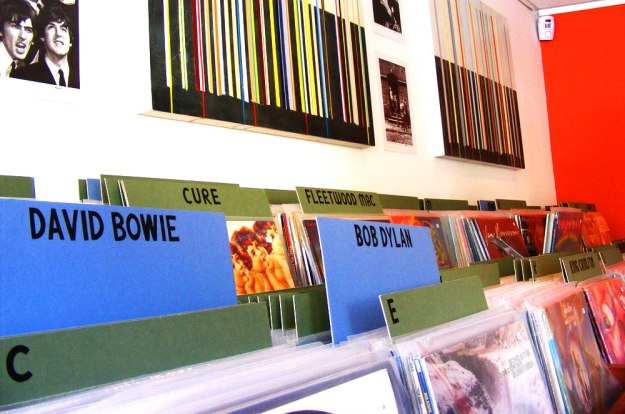
When I walk into the Centre for Better Grooves, a newly-opened record shop on Cranbrook Road, Bristol, I am met with a scene like nothing of the manic, cluttered display so lovingly depicted in Nick Hornby’s novel ‘High Fidelity’. There are no sticky floors or disinterested sales staff. Instead, I feel as if I have stumbled into someone’s living room. I am offered a cup of coffee and those all-too-familiar feelings of guilt – of unworthiness for not having swotted up enough on myriad unknown musicians beforehand – quickly disappear.

Whether consciously or not, a good portion of the UK’s used record shops cater mainly for the seasoned music head. This can make shopping for records a stressful experience for anyone without the prerequisite knowledge. The owner of the Centre for Better Grooves, Gordon Montgomery, who made his name as the force behind nationwide success Fopp, looks to buck this trend, to do away with the unfriendly, impenetrable stereotype of the used record store.

“Yeah, I don’t encourage that. We’re inclusive,” says Montgomery. Say a customer enters the shop and has no idea where to start with seminal German outfits Can or NEU!, he and Dean McCaffrey (Montgomery’s equally knowledgeable and approachable sales assistant) choose instead to turn this into a learning opportunity. “People come in,” he explains, “and they say they don’t know but ‘this is the sort of thing I’m interested in, can you help?’. So we provide a service.”

I want people to come to my shop and say ‘this is how you should do a record shop’…I want to be the best.

Montgomery is a businessman, through and through. He makes no bones about this nor about the fact that his key mission for the shop is to turn a profit – if this weren’t possible, he would never have set up in the first place. Sure, it’s an independent second-hand record shop, but it’s still a business and so he employs a lot of the sales techniques he developed during his Fopp days. Many used record stores have signs all over saying ‘All records are untested’ or ‘No returns’, but Montgomery doesn’t run things this way. In his shop, all records, new or old, are guaranteed. “People go to a second-hand store,” he says, “and they take a bit of a punt. They don’t feel as if they should take it back…Here, we don’t make the distinction between ‘used’ and ‘new’. We just say they’re all ‘records’.”

centre_for_better_grooves_02

Still, with so much competition on the nearby Gloucester Road (the longest stretch of independent shops in Europe), it is tough to bring in the punters. Cranbrook Road is not the most obvious of retail areas and so Montgomery decided early on that he would have to make his offer different from that of everyone else.

While other shops might buy in job lots of stock without considering whether it’ll sell, Montgomery makes sure to focus on the quality. He started record hunting in the mid-1980s by going to charity shops. “And when I’d lost the will to live,” he recalls, “doing three towns in a day, when I found myself in Newport, South Wales and I’d been there two hours with a bad belly and only managed to find one record for a pound, you start to think this isn’t quite right, is it?”

Now his stock comes mostly from dealers, which suits Montgomery fine since that’s where he often finds the best stuff. “The more serious collectors and DJs, they don’t want to be seen behind the decks with a repress, so they’ll pay a little bit more…they [the DJs] have built their collections over years and so they have long lists. If they can just buy a few off that list each month, I suppose they’re satisfied.”

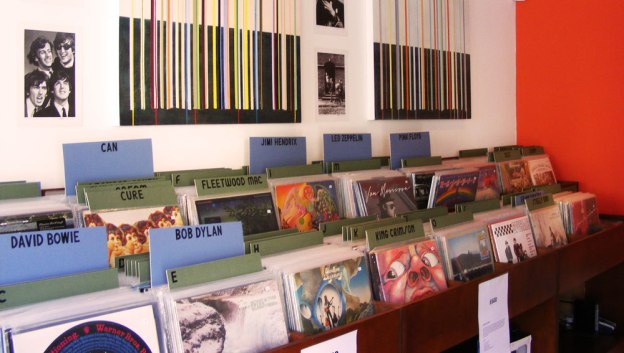
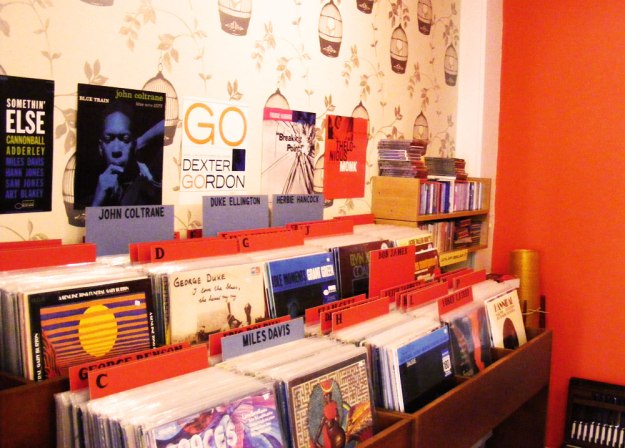
Soul and funk are two genres with which Montgomery’s shop seems fit to burst. For every James Brown and Isaac Hayes record, there’s one from Bobby Womack, Sam Cooke or the Ohio Players. The shop’s jazz section, tucked away in the back (“always put jazz in the back,” Montgomery riffs. “They like dark places, jazz fans”), is mightily impressive. There’s a turntable on hand, too, for anyone who wishes to sit with their coffee and try before they buy. Even the rock section, which sprawls across the front of the store, has top-rated selections from the likes of Pink Floyd, Neil Young, Led Zeppelin and King Crimson. As he takes me further round his store, I get the feeling that Montgomery is proud of every record he sells.

“If a jazz aficionado walks into a record shop and sees a load of Tubby Hayes,” he says, “they’ll go through the rest of the jazz section. If they don’t see that, they’ll think it’s not a good jazz shop – ‘No Tubby Hayes? I’m out’ – and that would be the same for Hampton Hawes or Bill Evans…That’s merchandising. Small independent record shops are poor at it. Used record shops are absolutely abysmal at it. They don’t lay it out so people can find it easily…They don’t use that psychology…They think ‘bugger ‘em, let them find it themselves.’”

Some traditionalists might turn their noses at applying professional retail techniques to the used vinyl market, but Montgomery doesn’t see it this way. “Most people appreciate it,” he says. “Here, it’s neat, tidy and well laid out. People like it here. Generally, record shops are supposed to just have fag butts on the floor and stink of real ale, and put people off.”

“It doesn’t matter how big the business is, I lose sleep over this because it never goes away.”

The psychology of retail is a constant theme when talking to Montgomery. The importance of keeping the bestsellers at the front, for instance (“that way, you’ve got a product in your hand. And once you’ve got a product in your hand, you’re gonna buy more products”). He recalls his time working at Virgin on Market Street in Manchester, back when record stores could sell thousands of albums a day. “You could not put records on shelves between 1pm and 4pm. It was impossible. If you ran out of a line, even if you had it in the stock room, you couldn’t get out there…’cause people used to congregate in record shops…That’s why, you know, at Rise, that’s why that café was put in there: for dwell time and also to appeal to a new demographic. ‘Well, if they don’t buy a record, at least they buy a coffee and a panini and we can get some rent.’”

I ask Montgomery whether profit really is the only goal for him. Does he have any other aims for the shop? “I want to be the frontrunner, I don’t want to be at the back. I want people to come to my shop and say ‘this is how you should do a record shop.’…I want to be the best.”

In order to achieve this, though, Montgomery admits he’ll need to move locations. He has a two-year lease for now, but once that’s up he’ll need to find something bigger, and more central, where he can relocate. The other factor in this is the vinyl market itself. Many continue to argue how the resurgence of vinyl is set for another downswing, how it’s just a fad. Then there is the explosion of vinyl shops opening in the last ten years. Bristol alone has a plethora of independent, second-hand record shops and so what does Montgomery plan to do once the market hits saturation? “I’m great at ironing. I can charge 20 pounds an hour to iron – and that’s more than I make out of selling records. Just gotta teach Dean to iron properly and we’ll have a full service.”

centre_for_better_grooves_01

There will always be a certain demand for good-quality records, Montgomery reckons. Whether there’s a profit to be made in future, though, is harder to tell. “If it doesn’t [make a profit], I’ll have to turn my hand to retailing other products. Or not retail at all. I’m unemployable. I can’t get a job. I haven’t interviewed since I was a kid…I don’t know how to dress or be compliant. HR would have me in the book within a week.”

Montgomery’s fine with this, though. He would much rather keep working for himself. I ask him whether he has advice for anyone looking to start a business: “Calculate the risk. Be prepared to lose a lot of sleep. It doesn’t matter how big the business is, I lose sleep over this because it never goes away…I used to run Fopp and I lose as much sleep over this as I did running Fopp…because you have to commit yourself. It’s not for everybody.”

In the end, it’s tough love that Montgomery issues over anything else: “Being self-employed, most people don’t do it – it’s too risky…There are no entitlements to running your own business. You’ve either got to get your sorry ass out of bed and do it or not.”

If You Ever Come Back – a short story

Originally published at kemptation.com on 29 June 2015. Words by Richard Kemp

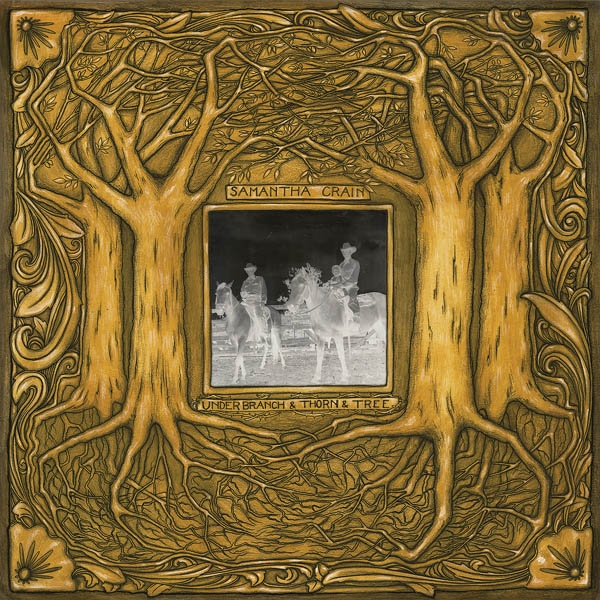
Samantha Crain is an expert storyteller, spinning delicate yarns with her beautiful words and music. The following short story was inspired by the singer-songwriter’s latest record, Under Branch & Thorn & Tree.

samantha_crain-under_branch_and_thorn_and_treeIt’s not until you see it laid out before you that you realise how short this life really is. Do you ever think about that?

It’s so lonely this side of the bed, staring at you through all the pipes and wires that keep your heart and lungs in check. The smell in here, I wonder, do you notice? Do you want to keel over too every time the stench of urine and medicine wafts its way up your nostrils?

The doctors have stopped visiting – the family too, the grandchildren anyway. It was when you started forgetting people’s names. Faces are one thing ­– your sight’s been rotten for years after all – but forgetting the names of your own grandchildren. They’d ask me why you remember one but not the other. It’s hard not to take those things personally.

Our kids still come to see you; do you see them? I’m not sure they want to be here, though. To see you like this, so weak, so vacant: their hero, defeated. Chained to a mechanical bed of plastic and rubber, machines beeping all around you as the help in white coats mill up and down, reminding us all that you’re probably not getting out this time.

What do you think? Your chances, I mean. I can’t tell anymore. I’m sorry, darling, but it’s true. You haven’t spoken in over a year, not past the beleaguered grunts and one-word commands that make no sense at all.

It’s so lonely this side of the bed. Seeing a broken man unable to hold himself up. I often wonder: what do you see? Is it the woman you loved? The one you married so young? Do you see the person who listened to Wagner with you turned all the way up? Do you see the girl you fought for all those times when the family would never approve? Do you see the one who stuck by you even when you did the stupidest things?

Or, do you see a lonely old woman who’s lost her husband to a tiny shell of a once-great man who can no longer speak? Do you see a shattered lover who has nothing left?

People come by the house every day to check on me, to see how I am. The faces keep changing, but the questions remain: can I get you anything? Let me know what you need, won’t you? I tell them all the same: I want nothing. I need nothing. All I really want is you, but then they bring me back here to talk to a statue. Do you even know I’m here? I shouldn’t say such things, but it’s hard to cope sometimes. I wish we’d seen this coming; at least we would’ve had time to decide what to do. Would you still want to be here? If it were me in bed, what then?

Instead, I stare through your eyes and feed you mashed-up apple crumble. I try to remember the man I once knew, the one I loved for so many years, but it’s hard with the smell of shit in the air and all those screams coming from down the hall. Is there anyone I could have loved more than you? I doubt it. When I’m home alone, wrapped up in bed, I try to imagine the covers are your arms, so strong, the pillow your chest. I fall asleep this way, so comfortable, so warm, so safe. I dream of our lives before the bed, a life that seems so far away now.

I’ve taken down some of the family photos – the nephews and nieces we never see – and replaced them with pictures of you and me. That time at the fairground and during the war when we first met.

I was stood on the landing the other day, staring at the photos, when a carer came by. Another new face, a short, skinny man, he said, ‘looked better today. You never know, he might be coming home soon.’ I winced at this and screamed at him, tears filling my eyes as quickly as anger filled everything else. There was no way you were ever coming back, I snarled. How dare he say that to me? The man’s eyes had widened. He was shaking. ‘Sorry,’ he whispered, and sloped off. The carer had changed by the next day.

I went back to looking at the photos, smiling in the way you always smiled at me. A love so pure, so real. I lay a hand on my hip as if it were yours and I thought about where you were now: in the mechanical bed covered in plastic, with the television blaring and food dribbling from your mouth. I thought about that and I thought about you, then I thought to myself, ‘if you ever come back, could you bring my heart?’


Samantha Crain‘s latest record, Under Branch & Thorn & Tree, is released on 17th July 2015 via Full Time Hobby. Pre-order the record now.