Originally published at kemptation.com on 20 October 2016. Words by Stephanie Yip
Released on 14 October 2016 via Kning Disk
Albert af Ekenstam is a man filled with melancholy. You can hear it in his voice; a soft and haunting croon that rings of sadness and whispers stories straight into your heart. You can hear it in his guitar; a gentle plucking of strings that dance so delicately you can barely believe the air around them stirs from their movement. And you can hear it in his lyrics; words of poetry that paint a picture of emotion that wouldn’t be amiss on a Scrubs soundtrack.
Inspired by artists such as Bon Iver and Mogwai and often compared with the late and great Eliot Smith, Albert af Ekenstam’s debut Ashes is the kind of record that captures you from the first and doesn’t let go until its rocked you comfortingly to sleep.
No doubt inspired by Mogwai, the record’s instrumental opener, 1996,is testament to how stripped back Ekenstam’s music can become. Opening on the plucking of a guitar, it follows a simple and repetitive chord progression, yet somehow manages to pour with emotion from 0:00 to 3:21. Throughout, layers of instrumental build in the background, but like salt to a meal they don’t add to the guitar but heighten it, making it more poignant and heartfelt.
Ashes breaks the silence, introducing us to Ekenstam’s somber and hollow voice. It’s a sad song with a troubled undertone that begs for relief. What follows is Angel Liz; a farewell letter to a loved one who has left this world leaving the artist to struggle desperately to comprehend the world without them. The song meets its peak at an instrumental bridge where fuzzy guitars lay ground for a stark and desperate piano that fades away, lost in the noise.
Devil Bird reads like the next chapter in Ekenstam’s life and is the one where he learns to fend on his own. “The Devil Bird is about the devil bird on your shoulder that always tells you to do the wrong thing”, he explains. “So you have to work against it and dare to choose the right – it’s about choosing the way you want to live your life and not living up to the standards built up by others. It’s when you’re at rock bottom and you have to choose whether to go up or down”.
Like so many of Ekenstam’s songs there’s a light at the end of the tunnel, you just have to find it. Made of Gold is one such song. It’s weighed down and heavy by nature but listen in and you’ll hear that it’s a comforting reminder that you and you alone have the power to free yourself from the prison of your mindset.
Just past the halfway mark and there’s a glow on the horizon with Walking. Accompanied by Sumie Nagano on vocals, it’s another reminder to keep moving forward in the face of adversity and is one of the most easily digestible tracks on the record for the lightness her voice lends to it.
2006 is riddled with electric guitar chords that dance with a coy joy. Similar to 1996, the track is built around layers of instrumental that work to heighten the silent lyrics and content smile hidden behind the scenes. It’s also one of the most brilliantly delivered tracks on the record.
As with all good stories, the record leaves on a positive note with final track, The Avenue. From the lilting guitar strings that dance in Ekenstam’s hands to the inclusiveness in his lyrics as he sings, “I’m already here by you, let’s leave this avenue”, the journey for him (and for us) is just about over. But it’s also just begun.
Originally published at kemptation.com on 4 July 2016. Words by Stephanie Yip
Released 8 July 2016 via Vanguard Records
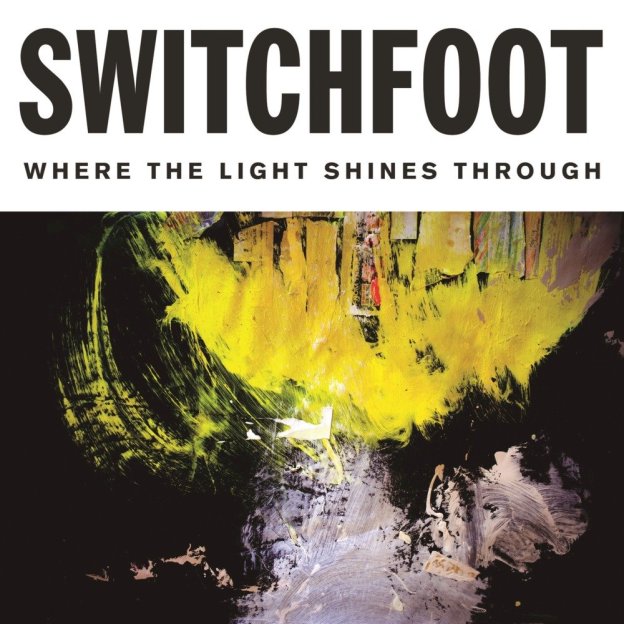
Light and dark converge in Switchfoot’s 10th studio record as the band grapples with adversities both individually and as a unit. “Not to be melodramatic,” says Tim Foreman (bass) “but it was a dark season for us, and this record became a source of light in the middle of a dark season. It rose organically out of the ashes of adversity and surprised us all.”
Thematically, it’s a record that strays from previous ventures, veering away from romance toward a more personal journey. Yet, it maintains that signature pop-rock sonic that Switchfoot is renowned for. Jon Foreman’s (lead singer) crisp American vox rings full of nostalgia, passion and a hope that you can practically see radiating across his smiling face as he belts out these stunners.
Jon describes it as “moving forward while looking back,” bringing to the foreground that positive outlook so synonymous with the band. “That’s how we landed on this idea that the wound is where the light shines though”, says Jon. “This album is about being surprised by hope.”
It’s then on the third and title track, following a rock number (Holy Water) and 70s throwback dance track (Float) that the record really opens up. Where the Light Shines Through is that feelgood surfer-rock song that comforts, empowers and inspires you to take on the challenge of life. No doubt it will quickly make it’s way into the band’s already packed live set.
I Won’t Let You Go returns Switchfoot back to its Learning to Breathe days. Slowing down the pace, it’s all delicate guitar plucking, soaring violin and hoarse and desperate words that rip at the heart in a love ode destined to send women into a swoon.
But straight-up romance is not what the record relies on and the band quickly rolls onto uplifting dance track If The House Burns Down Tonight. It’s a song about strength, moving forward and what really matters in life. It joins a slew of other dance-worthy tunes (Healer of Souls and Live It Well) that each compel one to take a handle of their lives.
The Day That I Found God lives on a sombre note, giving the record that much needed shade in tone that it was missing up until this point. It sits smack-bang at the halfway mark and though slow and repetitive, doesn’t overstay its welcome. Instead, it sets a tonal incline that culminates in Bull in A China Shop. All head bops, scratchy guitars, groove-beats and killer riffs, it’s easily one of the funkiest and most addictive tracks on the record. It also wakes the crowd up and get their fist pumps warmed up for the politically-inclined Looking For America.
Perhaps lost on those outside the country, Looking For America is a meaty rock number with a heady marching beat. Despite its best intentions to question freedom, violence and war, it evidently comes off trite and superficial, refusing to delve further into the situation than any other mainstream pop-rock outfit that has gone before it has.
But it’s closing song Hope is the Anthem that really brings the album full circle. Showcasing everything that Switchfoot is: rich in energy, soaring with strings, rife with guitar plucks and overflowing with vocals that reach to the heavens in a uplifting story of love, hope and the lifelong battle that is life.
Listen and smile, guys, because this is Switchfoot as we’ve always known them. And that’s just the way we like it.
Originally published at kemptation.com on 1 March 2016. Words by Stephanie Yip
Released 11 March 2016 – (Self-released)
Comparisons to Sia and Vance Joy are not as accurate as comparing this electro-pop artist with the likes of an enigmatic sonic powerhouse like Of Monsters and Men. Having found her audience through alternative radio station Triple J in Australia, this Sydney-born, Los Angeles based songstress is instantly captivating and ridiculously talented. Her vox is rich and resounding and the energy pounding through her veins and into the radio waves is mesmerisingly contagious.
She is Phebe Starr.
In 2014, Starr released a debut EP, Zero, onto this world which showcased songs that have since worked their way into a film, TV show and a commercial. There’s talk of a followup EP called Chronicles, but while that’s still talk, there’s Starr’s latest single Feel My Love to feast on. I say feast because it’s less of a taster of things to come and more of a full-blown meal to sump, savour and indulge in.
While there’s little buildup on this track, in truth, it doesn’t suffer because of it. In fact, it relishes in it, wheedling its way into our ears on a soothing lilt as it introduces us to a voice that toys with sexy femininity and childlike innocence. Then, in a flash, it explodes, grabbing you by the waist and holding you high. You pump your fists into the sky and flick your hair in every which way as electricity shoots through your veins. The festival gods have taken possession of your limbs and you’re airborne, “feeling the love” of the song’s mammoth beat as you’re carried on the shoulders of the mighty in what can only be described as musical ecstasy.
Originally published at kemptation.com on 12 November 2015. Words by Richard Kemp
(Photo credit: Jenny Berger Myhre)
Monday 9th November 2015
An angelic, yet haunting, performance from Seattle-based singer Briana Marela precedes Norwegian purveyor of avant-garde, and unapologetic crosser of lines, Jenny Hval. While Marela’s hand had gently built up feelings of pop-laced euphoria, Hval takes pleasure in announcing to the Bristol crowd that her hand is very different. A severed hand, perhaps.
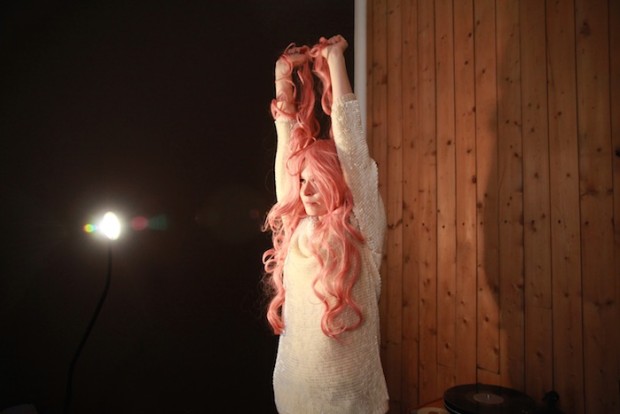
Perched atop a half-deflated yoga ball and wearing a Goldilocks blonde wig, Hval cuts a slight stage presence. Her curious personality and penchant for the uncomfortable, however, envelope the entire venue. This is embodied perfectly as she wanders through the first few rows of seating, an ethereal shape dressed in grey that is neither on this plain nor beyond it.
Terrifying screams are juxtaposed with uplifting, industrial beats that, when silenced, create a gaping chasm of loneliness almost too raw to bear.
Previous tours of Hval’s have included live bands and a focus on instrumentation while this show is very much centred on her performance. Screams of “who does your feeling?” and “so much death” serve to terrify while juxtaposed with uplifting, industrial beats that, when silenced, create a gaping chasm of loneliness almost too raw to bear.
It’s not all so serious, though. Hval proves that she has a sense of humour, referring to the yoga ball as her ‘spirit animal’ and even assuring the awestruck crowd that not everyone in Norway sings this kind of music.
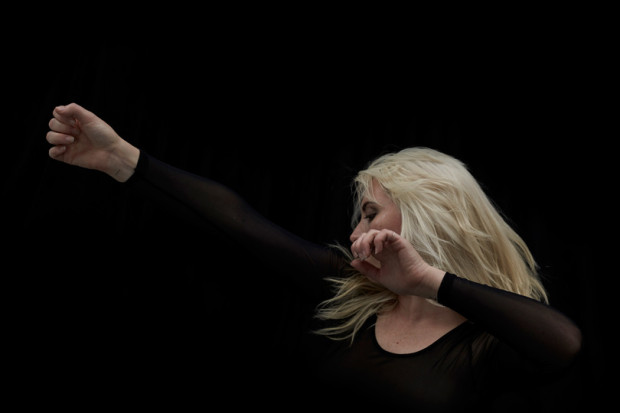
We sit through a short, awkward timeout, during which Hval patiently plays a cover of Lana Del Rey’s Summertime Sadness through a smartphone, and then the theatrics take a turn for the outlandish. Hval removes her blonde wig and places it on the floor above her now-also-removed jacket and trousers to create a flat model of herself. Dressed now all in black, she lays next to the empty frame, appearing to either dominate her own stage persona or submit to the empty vessel she has presented herself – all this soundtracked by a montage of Hval’s howling vocals.
Hval invites the audience to chat after her set, though she warns that she often makes no sense after a show. While a few people may have felt this way during the show, most will have left The Lantern giddy from having witnessed something that boldly challenges the way we think about live music performance.
Originally published at kemptation.com on 1 October 2015. Words by Stephanie Yip
Released 18 September 2015 via Anti-Records
Self-proclaimed for having a history of writing songs that have “been romantic or requited or whatever version of that well and true love story”, Irish singer-songwriter Glen Hansard is no stranger to the heartbreaking romantic ballad. “And that’s fine,” he says. But what advances him beyond his history as a member of The Frames or one half of Swell Season is the content.
“You have to sing about where you are,” he says. “I’m happier with [Didn’t He Ramble] because I’m singing about more about where I am – not where I want to be or where I was.” That is what he considers to be the greatest irony. The more he sings about the moment, exposes himself to the world, the more relatable his music becomes.
That moment has taken him to curate his second solo effort, Didn’t He Ramble. It’s an uplifting and beautifully written record riddled with motivational messages, words of comfort, and that signature air of romance and requite coupled with dancing piano keys that Hansard has perfected the past 25 years he’s been on the circuit.
Opening on a motivational heartbeat, Grace Beneath the Pines reads as a battler’s cry as it finds “grace upon my brothers on the firing lines” and “grace beneath the pines”. Hansard’s voice is eerily steady, rich and honest. A crying violin haunts in the background, accompanied lovingly by a piano at the bridge, setting the tone to tearful levels as the line “I’ll get through this” repeats itself until it’s all but lost on a violin string.
The following track returns us to the more romantic and country-style ditties of Hansard. His voice, less scratchy, sings happily around Wedding Ring as his fingers pluck his guitar lightly. You can almost imagine him swaying to the tune as he regales us with images of wild cattle and night skies. It’s a sound that sporadically makes itself known throughout, especially on easy-listening crooner Paying My Way.
Winning Streak takes us back to the hopeful and uplifting theme of the record. The Irish accent comes out in full force as Hansard sings to a loved one, whether they be romantically inclined or not, wishing them well. Wishing them all the happiness and fortune in the world.
No doubt it was chosen as the single for it’s winning radioplay potential.
Her Mercy continues the conversation Hansard is having with this other being, promising them comfort and mercy at the time of need.
Another hailed single, with good reason, is McCormack’s Wall. Simple, yet brilliant, it comes laced with soft vocal, melodic piano and memories of past loves. Three quarters in, it completes the Irish-ballad checkbox with a fiddle, jigging in glee for the days that were and the drinks that will come. It links aptly to the most energetic track on board, Lowly Deserter.
Rich and edgy and just past the album’s halfway mark, Hansard lets his hair loose in this country-rock tune that bites and crawls itself out of the sandpits of the wild west. Sharp vocals accompany a hearty trumpet in a short but memorable number. Snarling its way into second place for edginess is My Little Ruin. What it lacks in country-rock, it makes up in lyrical desperation. In-between the gnashing of teeth and the yearning violin, it pleads for a lover to let him in, to stand strong, screaming that they’re “better than the hour” and calling to “build yourself back up again”.
Acoustic guitar plucks its way into final track, Stay The Road. It’s as raw and pure as the voice that enters. Clear as crystal and sorrowful as winter, the steady earful urges us along, bringing us hope and a shoulder to lean on as it pulls us out from under and into the light, inevitably returning us full-cycle to the downtrodden but determined dialogue of Grace Beneath The Pines.
Stay the road? It’s not hard to when Hansard is behind the wheel to take us along on this emotionally-charged journey.
Originally published at kemptation.com on 26 June 2015. Words by Laura Thomas
There was a time when England was the very apotheosis of a failed state, as waves of invaders scratched a living in the ruins of an ancient civilisation. The land depopulated by famine and relentless epidemics, religious sects practiced trial by judicial torture. Public executions by burning or beheading were common. Scientists were heretics. Civil wars raged between absolute rulers, armies packed with foreign proxies. It was a haven for pirates and launched countless wars of aggression.
No one can be sure quite what triggered the quiet revolution, known as ‘The Age of Enlightenment’, that led England and Western Europe out of the dark ages. Thoughtful souls gathered in coffee shops and parlours and replaced superstition with science, bigotry with reason, and fear with knowledge. Maths, science and history; unravelling the mysteries of it all started with these small bands.
It is that salon movement, that restless curiosity, during the dawn of the age of reason, that Also festival’s curator, Helen Bagnall, sought to recreate as scientists, writers, musicians and artists all gathered in rural Warwickshire.
Also festival managed to assemble not only a guestlist of great variety and depth, but an audience to match.
Salon-London has been running for several years now, promoting events with science, art and psychology at the heart of the agenda. The movement has spread through word of mouth, eschewing commercial marketing models and defying received wisdom.
The festival that grew out of those clubs is now in its second year, with the Capability Brown-designed landscape (the original, not the 1970s art-rock band) forming the ideal framing. Infrastructure is otherwise minimal; adequate, but never falling into empty spectacle.
On Friday, the excellent Mr Heart took to the main stage. Before that, though, came Matthew Morgan with a performance heavily influenced by Bauhaus (the 1920s German art movement, not Pete Murphy’s post punk poseurs).
Mr Heart’s Tamsin A is every bad girl’s punk fantasy: dressed in black, crushed velvet and DMs, she spat and snarled as the band launched into a full-on psycho waltz. Polyrhythms lay underpinned by the powerful, lyrical percussion of Helen Suzy, Amy Spray’s nimble bass lines thudding against your teeth like a gob full of vomit. In front of them, a dozen or so toddlers sat and looked on politely, their parents standing behind the tousle-haired moppets, reminiscing about Glastonbury ’04. Muscle memory soon took over, though, as another generation lurched sheepishly into Dad Dancing.
Mr Heart put on a good show – better, in fact, than the format they adopt allows. Songs were interesting and well-constructed; A’s lyrics often hinted at subtlety (and real rage) but were masked by the over-use of loops and vocal effects and by their sometimes-clichéd style. Arrangements were complex and interesting, with changes of rhythm and tempo. There was great use of the considerable dynamic range of the band to provide light and shade. A’s guitar was underused, with solos only rare teases and promises of Tom Verlaine-type soaring, spiky arpeggios unfulfilled (lock this girl in a room with a copy of Marquee Moon). The band’s set was mostly drawn from The Unspeakable Mr Heart, which is worth a listen. Keep an eye on this band and watch them develop.
As Mr Heart were wrapping up their tight and well-received set, the Bat Walk, led by Stuart Spray, went past, down to the lake in the dusk of a midsummer’s evening. Nearby, a cocktail bar in the Black Cab Coffee Co dispensed martinis and good cheer as Marcel Lucont, the Gallic comedy creation of AlexisDubus, took the main stage to entertain a large and enthusiastic audience and bring the evening to an end.
Saturday, the longest day, dawned with festival goers in surprisingly good shape. This is a crowd that has a pint of water before it goes to sleep, refreshingly free of the usual mobs of testosterone-driven, pissed-up wankers shouting at the moon till silly o’clock. There was one man playing pipe and tabor to welcome in the dawn, and he is recovering well following rectal surgery.
This was a day for dodging the showers and wandering from venue to venue. Down in the disco bunker (made from straw bales, no less), DJ Steve Vertigo taught kids how to modulate EQ rapidly and produce a rhythmic effect. Couples were looking over the lake sitting on wicker settees. Strangers met and chatted about the appropriate uses of post-feminist irony and the modal structure of the first Velvet Underground LP.
The main stage was packed to hear David Tong’s talk on dark matter. A dedicated knitting tent was well attended, too, and everywhere conversations were breaking out as a community started to form. The very brave went wild swimming in the lake. Few people bothered climb to the top of the hill where there was rumoured to be 3G reception.
Joanne Harris entranced the crowd with her reinvention of Loki for the modern age as a sort of cosmic Arthur Daley. Singer-songwriter Matt Maltese, only 19, showed some deft touches in composition and arrangement; a little bit predictable but plenty of time to mature. Joana Parker gave an interesting talk on her book of maps, though possibly needing a map to show when Marcos Santana and the TRIBO samba drummers were going to kick off, we lost the last ten minutes of her talk.
It became more normal to engage your neighbour as barriers came down, and that’s when things started to get really interesting. Somehow, Bagnall had assembled not just a guestlist of great variety and depth, but an audience to match. Daniel Richard’s excellent talk on his book, Great British Songwriters, grew into a discussion of the intellectual and scientific basis of sythesthesia (seeing sounds as colours), with one member of the audience, Mr Heart‘s Amy Spray, talking like a consultant neurologist. Jamie Bartlett led a passionate discussion from the floor about the Dark Net, the internet and its abusers.
Cool and beautiful, Karin Fransson mixed her own sophisticated jazz-light compositions with traditional Swedish numbers to celebrate mid-summer, generously providing a measure of the Swedish ardent spirit snaps for each audience member before leading a drinking song and having three or four glasses herself; after which point she became rather less cool if no less beautiful.
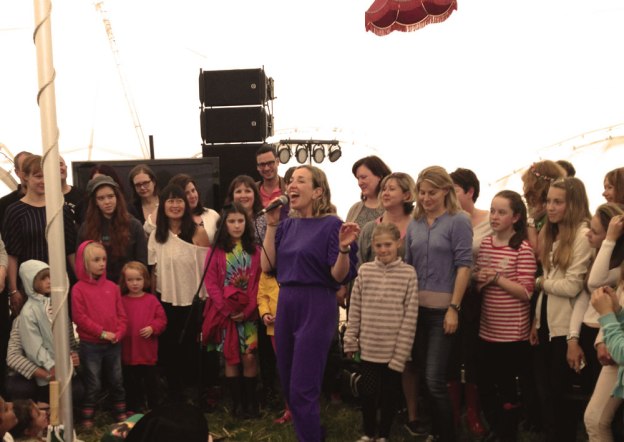
The site was abuzz during the afternoon from those who had attended musical director Juliet Russell’s workshop and choir that morning. The main stage was packed for her show for which she had expected maybe a dozen people at most; in the end, 40 festival goers packed themselves in front of the stage to watch Russell give a performance of spine-tingling intensity and passion.
Also is a Marmite festival: you’ll either love it or hate it. If your idea of a good time is to get wankered on supermarket vodka to a deafening soundtrack of cock-rock bands and wake up in your tent covered in mud with a trainee accountant from Basingstoke snoring in your ear, then this festival is not for you, look away now.
Also is one of the few festivals to take genuine risks in pursuit of its aims; it has a soul and a mission and a confidence that embraces the chance of ridicule. This is a festival with no barriers between performers and punters. Artists were there as facilitators rather than entertainers, educators and not stars. The audience comprised poets and scientists, doctors and dreamers, teachers and dozens and dozens of individuals from all walks of life who came away with renewed belief in their own intellect and creativity, with more hope and less fear.
In Juliet Russell’s own words:
“Sometimes we need reminding
To take beauty where we find it
I am you and you are me
And my voice lifts my soul
And I set my spirit free.”
At the climax of the number, led by Russell and the massed choir, festival director Helen Bagnall gave a little jump, fist pumping the air. Agreed, Helen. You smashed it. Well done.

 Kemptation