

Category Archives: Albums

Albert af Ekenstam – Ashes

Originally published at kemptation.com on 20 October 2016. Words by Stephanie Yip

Released on 14 October 2016 via Kning Disk

Albert af Ekenstam is a man filled with melancholy. You can hear it in his voice; a soft and haunting croon that rings of sadness and whispers stories straight into your heart. You can hear it in his guitar; a gentle plucking of strings that dance so delicately you can barely believe the air around them stirs from their movement. And you can hear it in his lyrics; words of poetry that paint a picture of emotion that wouldn’t be amiss on a Scrubs soundtrack.

Inspired by artists such as Bon Iver and Mogwai and often compared with the late and great Eliot Smith, Albert af Ekenstam’s debut Ashes is the kind of record that captures you from the first and doesn’t let go until its rocked you comfortingly to sleep.

No doubt inspired by Mogwai, the record’s instrumental opener, 1996,is testament to how stripped back Ekenstam’s music can become. Opening on the plucking of a guitar, it follows a simple and repetitive chord progression, yet somehow manages to pour with emotion from 0:00 to 3:21. Throughout, layers of instrumental build in the background, but like salt to a meal they don’t add to the guitar but heighten it, making it more poignant and heartfelt.

Ashes breaks the silence, introducing us to Ekenstam’s somber and hollow voice. It’s a sad song with a troubled undertone that begs for relief. What follows is Angel Liz; a farewell letter to a loved one who has left this world leaving the artist to struggle desperately to comprehend the world without them. The song meets its peak at an instrumental bridge where fuzzy guitars lay ground for a stark and desperate piano that fades away, lost in the noise.

Devil Bird reads like the next chapter in Ekenstam’s life and is the one where he learns to fend on his own. “The Devil Bird is about the devil bird on your shoulder that always tells you to do the wrong thing”, he explains. “So you have to work against it and dare to choose the right – it’s about choosing the way you want to live your life and not living up to the standards built up by others. It’s when you’re at rock bottom and you have to choose whether to go up or down”.

Like so many of Ekenstam’s songs there’s a light at the end of the tunnel, you just have to find it. Made of Gold is one such song. It’s weighed down and heavy by nature but listen in and you’ll hear that it’s a comforting reminder that you and you alone have the power to free yourself from the prison of your mindset.

Just past the halfway mark and there’s a glow on the horizon with Walking. Accompanied by Sumie Nagano on vocals, it’s another reminder to keep moving forward in the face of adversity and is one of the most easily digestible tracks on the record for the lightness her voice lends to it.

2006 is riddled with electric guitar chords that dance with a coy joy. Similar to 1996, the track is built around layers of instrumental that work to heighten the silent lyrics and content smile hidden behind the scenes. It’s also one of the most brilliantly delivered tracks on the record.

As with all good stories, the record leaves on a positive note with final track, The Avenue. From the lilting guitar strings that dance in Ekenstam’s hands to the inclusiveness in his lyrics as he sings, “I’m already here by you, let’s leave this avenue”, the journey for him (and for us) is just about over. But it’s also just begun.
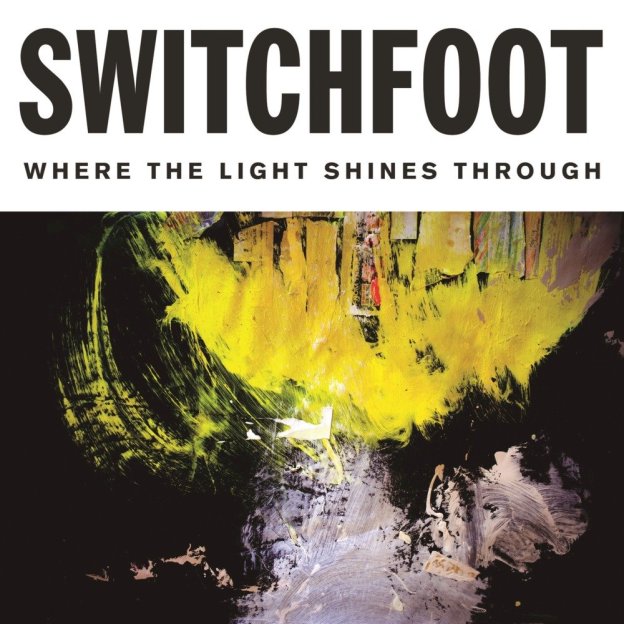

Switchfoot – Where The Light Shines Through

Originally published at kemptation.com on 4 July 2016. Words by Stephanie Yip

Released 8 July 2016 via Vanguard Records

Light and dark converge in Switchfoot’s 10th studio record as the band grapples with adversities both individually and as a unit. “Not to be melodramatic,” says Tim Foreman (bass) “but it was a dark season for us, and this record became a source of light in the middle of a dark season. It rose organically out of the ashes of adversity and surprised us all.”

Thematically, it’s a record that strays from previous ventures, veering away from romance toward a more personal journey. Yet, it maintains that signature pop-rock sonic that Switchfoot is renowned for. Jon Foreman’s (lead singer) crisp American vox rings full of nostalgia, passion and a hope that you can practically see radiating across his smiling face as he belts out these stunners.

Jon describes it as “moving forward while looking back,” bringing to the foreground that positive outlook so synonymous with the band. “That’s how we landed on this idea that the wound is where the light shines though”, says Jon. “This album is about being surprised by hope.”

It’s then on the third and title track, following a rock number (Holy Water) and 70s throwback dance track (Float) that the record really opens up. Where the Light Shines Through is that feelgood surfer-rock song that comforts, empowers and inspires you to take on the challenge of life. No doubt it will quickly make it’s way into the band’s already packed live set.

I Won’t Let You Go returns Switchfoot back to its Learning to Breathe days. Slowing down the pace, it’s all delicate guitar plucking, soaring violin and hoarse and desperate words that rip at the heart in a love ode destined to send women into a swoon.

But straight-up romance is not what the record relies on and the band quickly rolls onto uplifting dance track If The House Burns Down Tonight. It’s a song about strength, moving forward and what really matters in life. It joins a slew of other dance-worthy tunes (Healer of Souls and Live It Well) that each compel one to take a handle of their lives.

The Day That I Found God lives on a sombre note, giving the record that much needed shade in tone that it was missing up until this point. It sits smack-bang at the halfway mark and though slow and repetitive, doesn’t overstay its welcome. Instead, it sets a tonal incline that culminates in Bull in A China Shop. All head bops, scratchy guitars, groove-beats and killer riffs, it’s easily one of the funkiest and most addictive tracks on the record. It also wakes the crowd up and get their fist pumps warmed up for the politically-inclined Looking For America.

Perhaps lost on those outside the country, Looking For America is a meaty rock number with a heady marching beat. Despite its best intentions to question freedom, violence and war, it evidently comes off trite and superficial, refusing to delve further into the situation than any other mainstream pop-rock outfit that has gone before it has.

But it’s closing song Hope is the Anthem that really brings the album full circle. Showcasing everything that Switchfoot is: rich in energy, soaring with strings, rife with guitar plucks and overflowing with vocals that reach to the heavens in a uplifting story of love, hope and the lifelong battle that is life.

Listen and smile, guys, because this is Switchfoot as we’ve always known them. And that’s just the way we like it.

Glen Hansard – Didn’t He Ramble

Originally published at kemptation.com on 1 October 2015. Words by Stephanie Yip

Released 18 September 2015 via Anti-Records

Self-proclaimed for having a history of writing songs that have “been romantic or requited or whatever version of that well and true love story”, Irish singer-songwriter Glen Hansard is no stranger to the heartbreaking romantic ballad. “And that’s fine,” he says. But what advances him beyond his history as a member of The Frames or one half of Swell Season is the content.

“You have to sing about where you are,” he says. “I’m happier with [Didn’t He Ramble] because I’m singing about more about where I am – not where I want to be or where I was.” That is what he considers to be the greatest irony. The more he sings about the moment, exposes himself to the world, the more relatable his music becomes.

That moment has taken him to curate his second solo effort, Didn’t He Ramble. It’s an uplifting and beautifully written record riddled with motivational messages, words of comfort, and that signature air of romance and requite coupled with dancing piano keys that Hansard has perfected the past 25 years he’s been on the circuit.

Opening on a motivational heartbeat, Grace Beneath the Pines reads as a battler’s cry as it finds “grace upon my brothers on the firing lines” and “grace beneath the pines”. Hansard’s voice is eerily steady, rich and honest. A crying violin haunts in the background, accompanied lovingly by a piano at the bridge, setting the tone to tearful levels as the line “I’ll get through this” repeats itself until it’s all but lost on a violin string.

The following track returns us to the more romantic and country-style ditties of Hansard. His voice, less scratchy, sings happily around Wedding Ring as his fingers pluck his guitar lightly. You can almost imagine him swaying to the tune as he regales us with images of wild cattle and night skies. It’s a sound that sporadically makes itself known throughout, especially on easy-listening crooner Paying My Way.

Winning Streak takes us back to the hopeful and uplifting theme of the record. The Irish accent comes out in full force as Hansard sings to a loved one, whether they be romantically inclined or not, wishing them well. Wishing them all the happiness and fortune in the world.

No doubt it was chosen as the single for it’s winning radioplay potential.

Her Mercy continues the conversation Hansard is having with this other being, promising them comfort and mercy at the time of need.

Another hailed single, with good reason, is McCormack’s Wall. Simple, yet brilliant, it comes laced with soft vocal, melodic piano and memories of past loves. Three quarters in, it completes the Irish-ballad checkbox with a fiddle, jigging in glee for the days that were and the drinks that will come. It links aptly to the most energetic track on board, Lowly Deserter.

Rich and edgy and just past the album’s halfway mark, Hansard lets his hair loose in this country-rock tune that bites and crawls itself out of the sandpits of the wild west. Sharp vocals accompany a hearty trumpet in a short but memorable number. Snarling its way into second place for edginess is My Little Ruin. What it lacks in country-rock, it makes up in lyrical desperation. In-between the gnashing of teeth and the yearning violin, it pleads for a lover to let him in, to stand strong, screaming that they’re “better than the hour” and calling to “build yourself back up again”.

Acoustic guitar plucks its way into final track, Stay The Road. It’s as raw and pure as the voice that enters. Clear as crystal and sorrowful as winter, the steady earful urges us along, bringing us hope and a shoulder to lean on as it pulls us out from under and into the light, inevitably returning us full-cycle to the downtrodden but determined dialogue of Grace Beneath The Pines.

Stay the road? It’s not hard to when Hansard is behind the wheel to take us along on this emotionally-charged journey.

Plain White T’s – American Nights

Originally published at kemptation.com on 14 April 2015. Words by Stephanie Yip

Released 28 April 2015 via Megaforce Records

There are bands that constantly evolve, altering their sound, content and get-up in line with what’s currently being digested on the charts. Then, there are bands that you can constantly bank on to remain exactly how you remembered them when you first laid your ears to their music so many years ago.

Plain White T’s is one of the latter.

After what seems like a lifetime of hiatus (their last record, Wonders of the Younger was released in 2010 before they entered a so-called ‘career limbo’) the five-piece pop-rock band has returned with their latest full-length, American Nights. And in case longtime fans are wondering, yes, it IS everything you remember the Plain White T’s to be: Poppy, energetic, romantically inclined and all-round fun. And as for the get-up? There’s nothing new here either, with all five original band members (from 2002 onward) returning for your listening pleasure.

The record opens with title track, American Nights. It’s a poppy love song that doesn’t take itself too seriously and does well to lift the spirits and the lungs, howling woooaaahhhh into the star-filled sky right unto the very last. It’s a lead-up into something slightly more down tempo, but no less easy-on-the-ears.Bred from happy-fantastic land of feel-good ditties, Pause sings of slowing down, looking around, and appreciating what’s around you.

Never Working is probably one of the least memorable tracks on the record. There’s always one, I guess. It’s quite moot, a little repetitive and seems not to actually go anywhere (guess that’s why it’s not working?). On the plus side, it’s a short-lived number and is followed by a more fun and digestible one called Heavy Rotation. Welcome something flirtatious and cute. And, in true Plain White T’s style, is not-so-secretly also an ode to a girl that singer Tim Lopez is puppy-dogging over. And while it pales in comparison to the band’s breakout and biggest hit, Hey There, Delilah, it’s still very much a contender for an upcoming single.

The halfway point brings on the slower ballads – another area where the Plain White T’s shine, and they do so grandly with Stay. Calling out to that girl, it pulls on all the emotions of the predominantly female fan base, with vocalist Tom Higgenson calling out for one more chance with the love he’s losing. Finally, there’s the standout ballad, You Belong. Again, it’s another love song that finds Higgenson serenading that perfect halo of a woman, placing her on the pedestal of a goddess. Listening to it, it almost feels as though you’ve entered a reverse Taylor Swift music universe, where all that rings across the airwaves is divine worship, as opposed to hateful revenge.

And just like that, the Plain White T’s crank up the energy again for a rollicking, fist-pumping medley of daydreams and romance, the kind that you can imagine spinning around in circles to until you’re dizzily flopping onto the floor, smile permanently fixated upon your childish little mug.

While plain in tone and harmony, the saving grace for Someday You’re Gonna Love Me is in the lyrics. Inevitably, among the poppy haze and four-beat melody, what Plain White T’s has got down to a, well, you know… (T), is their ability to reach out to the ladies and make them fall in love with them. With words. With romance. With a Mr Darcy kind of ultimate perfection. There’s this unmistakable air of euphoria that their lyrics, rife with conviction, induce that send women into an unbearable ovulating swoon. And the song’s sugar sweet somethings: “When we see things clearly / You’ll know I’ve loved you all this time / And I promise every kiss will be the sweetest of your life” might just send you there.

Love Song is another fine example of exactly what Plain White T’s does, only this time round, it’s a different kind of europhia – more giddy, less sentimental. Like sunshine on a rainy day, it’s the kind of ditty that lives in a tropical holiday or a 1980s video clip, where backup dancers sway and clap in tune with the music, smiles plastered onto their faces and Hawaiian shirts swaying gently in the breeze. It’s cheesy but oh-so-ridiculously fun.

Penultimate track, Time to Move On brings us back to the land of traditional pop, taking a page from Pause, it’s another lighthearted, positive song about looking forward, head-high and future bright and runs gleefully into the arms of the album’s closer: Here Comes That Sunrise. As expected, it’s another positive song about looking forward, head-high and future bright (repetition intended) with just a little more ‘oomph’ than its predecessor to really close off the record.

While nothing new, nothing progressive, and nothing compared to the success of Hey There, Delilah, Plain White T’s are everything you remembered them to be.

Welcome to nostalgia. Glorious, euphoric, pop-rock nostalgia.