
Originally published at kemptation.com on 6 December 2015. Words by Richard Kemp
It was almost a shock to learn that Elvis Perkins would be coming out with a third studio album. Until 2015, fans would have been forgiven for assuming the New York recording artist was on indefinite hiatus. Perkins released his debut, Ash Wednesday, in 2007, with album number two, Elvis Perkins in Dearland, following just two years later.
And then, silence…
OK, silence is perhaps an overstatement, but not a single new album emerged from the Perkins camp in that time. The bare-bones folk of Ash Wednesday had gained Perkins the tricky moniker of “New Dylan” (no doubt for its gripping opener, While You Were Sleeping) while …Dearland saw him and his band combine their efforts to create an out-and-out group record; the result bearing exuberant choruses (I Heard Your Voice in Dresden) and wholly memorable sing-alongs (Doomsday).
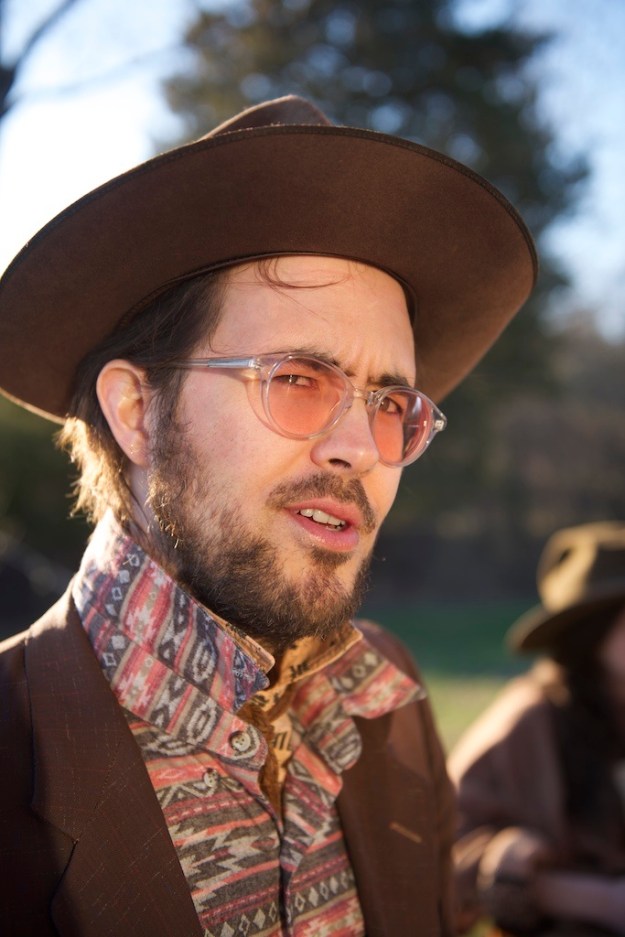
Understandable, then, that the Perkins fan base wanted him back. They needed more; and in early 2015, the musician announced that he would be returning with his third full-length studio album, the now-acclaimed I Aubade, and a full US and European tour. It is before the show on the Bristol leg of this tour that Kemptation meets with Elvis Perkins to talk life, language and revolution.
Elvis Perkins has been through more than most when it comes to heartbreak. He lost both of his parents by the time he was 25: his father, actor Anthony Perkins, famous for playing Norman Bates in Alfred Hitchcock’s ‘Psycho’, to AIDS in 1992, and his mother, photographer Berry Berenson, to the terrorist attacks in New York City on September 11 2001.
Naturally then, Perkins has a lot to be sad about. This certainly shows in his musical output (he even named his first record Ash Wednesday in reaction to the aftermath of the attacks, which occurred on a Tuesday). And yet, as the conversation flows, Perkins seems content, satisfied, even…happy. He cracks jokes and dives into unanticipated tangents, bringing up far more interesting answers than the original questioning could ever have managed. This change in character is clear on listening to the new record, too. The album, I Aubade, is a far cry from the Elvis Perkins of old. “It’s the most genuine Elvis Perkins record there is,” he says, putting this down to the fact that he wrote and recorded the entire album alone, without influence from any producer (as with Ash Wednesday) or from the rest of his band (as with …Dearland).
Perkins had no management or label following the release of …Dearland and the subsequent Doomsday EP and so he decided to take his time with I Aubade, to make the album that he truly wanted. ‘Aubade’, French for the morning version of a serenade and the title word of Perkins’ album, came to him out of the blue. He was immediately struck by the word’s ambiguity; it also seemed to fit perfectly with what he was attempting with his music. “I had been aiming to make songs that would be for metaphysical morning time,” he says, and so ‘aubade’ seemed like a gift from the unknown (or at least the app store – he is not shy in admitting that ‘aubade’ came to him via a word-of-the-day alert on his phone).
“If you have any kind of audience, any kind of a voice, you must use it for good, whatever good looks like to you”
Perkins is fascinated with language. He fills his songs with plays-on-words and double meanings, something that he learnt from an early age. He makes reference to his father, who was a keen word player and a relentless pun maker. The UK loves its puns, which sets Perkins to thinking about his British ancestry. “I don’t know where Perkins comes from specifically in the UK, but we definitely had ancestors coming over. I think we had one on the Mayflower in fact, so maybe it’s a blood thing. They brought the puns with them over the seas.”
Many of Perkins’ song lyrics and titles also come from what he describes as a “slur of the hearing”. How’s Forever Been, Baby? was something he thought he had heard at a barbecue while Send My Fond Regards To Lonelyville comes from him mishearing the name of a neighbourhood in Providence, Rhode Island called Olneyville.
Perkins, as well as playing with words, likes to experiment with perception. His music often combines sad themes with catchy footstompers that take a few listens to realise what you are dancing to. When asked why listeners respond to this so well, Perkins is at first reluctant to place a finger on it, though eventually attempts an answer: “it must have something to do with the binary nature of existence,” he says. “The life and the death, the black and the white…If you can present something that breaks apart dichotomy by giving you both at the same time…you have maybe broken through some kind of divide that is only perceived in the mind.”
While I Aubade is a personal record for Perkins, it has many more take-home messages for its listeners than its predecessors. Perkins believes that, as the Earth’s “self-appointed custodians”, humans are doing a poor job of protecting their planet and he is unafraid to sing about this. Album track 2$ is a wakeup call to any who believe in the power of the presidential vote. In the song, Perkins asks whether a Washington can redeem a Jefferson, alluding to the one-dollar and two-dollar bills and the fact that the real power and vote lies in where we choose to spend our money rather than what box we decide to tick on election day.
Activism is not the coolest subject for a songwriter to tackle – Michael Jackson and Neil Young are prime examples of this with their environmental calls to arms – and regardless of how imperative these issues are, Perkins has noticed some pushback. An audience member in Copenhagen had invited him and the band back to his place after a show. He was nice, says Perkins, but he also had no problems with saying exactly what he thought, even if it would ruffle some feathers. “He let me know that I had been preaching to the converted…it was difficult to not come across as an asshole. This was a fan of mine telling this to me.”
The experience in Copenhagen surprised Perkins and so began an internal battle between the side of his brain telling him he shouldn’t make songs like 2$ because they annoy people and the other side that saw it as his duty. Ultimately, he decided that, whether people want to hear it or not, his message is one which bears repeating over and over again: “if you have any kind of audience, any kind of a voice, you must use it for good, whatever good looks like to you.”
Tonight’s set includes a heady mix of classic Elvis Perkins songs – Doomsday makes an appearance, complete with marching bass drum, as does a heart-wrenching rendition (what other rendition is there?) of Ash Wednesday – plus many tracks from the new album. Pun-riddled jaunt Hogus Pogus gets plenty of laughs, with the singer recounting the tale of a man who has his heart replaced with that of a pig. New song Now Or Never Loves stirs the chuckles, too. Perkins and bassist Danielle Ackroyd play the will-they-won’t-they romantic couple, leaning in to each other and stopping short on the closing beat – “it’s a cliffhanger,” he says.
Perkins is clearly comfortable in his role as bandleader and stage performer. He recognises this himself, too: “I don’t know what happened in the past several years, but I enjoy the touring process much more than I did before.” When the band plays Slow Doomsday, Perkins encourages the Bristol crowd to sing along, calling with a grin, “we’ll let you know when your time has come, Bristol.”
“I believe that we need revolution if we’re ever going to survive and not kill off every other thing that inhabits the oceans and land and sky”
The band plays 2$ tonight as well, with Perkins introducing it simply as a song about spending your money wisely. Knowing the story behind the song and its shaky reception makes it all the more powerful when performed live. Instead of giving much preamble to this song, though, Perkins uses any available mic time to spread his love for all living things, reminding the crowd that we are all part of the same one world and that we’re all headed for the same place. He talks about second chances, too, something even the people who committed the abominable attacks in Paris on 13 November 2015 will receive. Spoken by anyone other than Elvis Perkins, this may have come across as naive, even thoughtless, but this is a person who has had more than his fair share of inner turmoil to deal with and so, instead, it is clear that Perkins is coming from a place of love.
This comes off during our conversation, too. Perkins talks about revolution – the internal kind, rather than external: “I’m not saying it needs to be violent or anything, when I say ‘revolution’, but I do think we need revolution if we’re going to survive and not kill off every other thing that inhabits the oceans and land and sky.”
The band pulls out a couple of unheard numbers during tonight’s set, suggesting that perhaps the next record will have a quicker turnaround than the five and a half years we had to wait for I Aubade. Speaking to fans after the show, Perkins assures them exactly this. He will be back, and Bristol will be ready and waiting with warm, welcoming and unfalteringly open arms.
 Kemptation