
Originally published at kemptation.com on 3 August 2015. Words by Richard Kemp
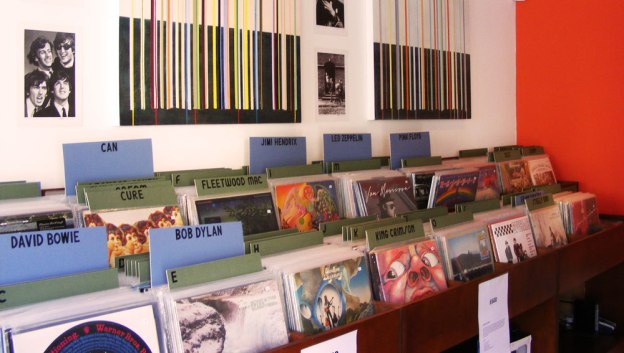
When I walk into the Centre for Better Grooves, a newly-opened record shop on Cranbrook Road, Bristol, I am met with a scene like nothing of the manic, cluttered display so lovingly depicted in Nick Hornby’s novel ‘High Fidelity’. There are no sticky floors or disinterested sales staff. Instead, I feel as if I have stumbled into someone’s living room. I am offered a cup of coffee and those all-too-familiar feelings of guilt – of unworthiness for not having swotted up enough on myriad unknown musicians beforehand – quickly disappear.
Whether consciously or not, a good portion of the UK’s used record shops cater mainly for the seasoned music head. This can make shopping for records a stressful experience for anyone without the prerequisite knowledge. The owner of the Centre for Better Grooves, Gordon Montgomery, who made his name as the force behind nationwide success Fopp, looks to buck this trend, to do away with the unfriendly, impenetrable stereotype of the used record store.
“Yeah, I don’t encourage that. We’re inclusive,” says Montgomery. Say a customer enters the shop and has no idea where to start with seminal German outfits Can or NEU!, he and Dean McCaffrey (Montgomery’s equally knowledgeable and approachable sales assistant) choose instead to turn this into a learning opportunity. “People come in,” he explains, “and they say they don’t know but ‘this is the sort of thing I’m interested in, can you help?’. So we provide a service.”
I want people to come to my shop and say ‘this is how you should do a record shop’…I want to be the best.
Montgomery is a businessman, through and through. He makes no bones about this nor about the fact that his key mission for the shop is to turn a profit – if this weren’t possible, he would never have set up in the first place. Sure, it’s an independent second-hand record shop, but it’s still a business and so he employs a lot of the sales techniques he developed during his Fopp days. Many used record stores have signs all over saying ‘All records are untested’ or ‘No returns’, but Montgomery doesn’t run things this way. In his shop, all records, new or old, are guaranteed. “People go to a second-hand store,” he says, “and they take a bit of a punt. They don’t feel as if they should take it back…Here, we don’t make the distinction between ‘used’ and ‘new’. We just say they’re all ‘records’.”
Still, with so much competition on the nearby Gloucester Road (the longest stretch of independent shops in Europe), it is tough to bring in the punters. Cranbrook Road is not the most obvious of retail areas and so Montgomery decided early on that he would have to make his offer different from that of everyone else.
While other shops might buy in job lots of stock without considering whether it’ll sell, Montgomery makes sure to focus on the quality. He started record hunting in the mid-1980s by going to charity shops. “And when I’d lost the will to live,” he recalls, “doing three towns in a day, when I found myself in Newport, South Wales and I’d been there two hours with a bad belly and only managed to find one record for a pound, you start to think this isn’t quite right, is it?”
Now his stock comes mostly from dealers, which suits Montgomery fine since that’s where he often finds the best stuff. “The more serious collectors and DJs, they don’t want to be seen behind the decks with a repress, so they’ll pay a little bit more…they [the DJs] have built their collections over years and so they have long lists. If they can just buy a few off that list each month, I suppose they’re satisfied.”
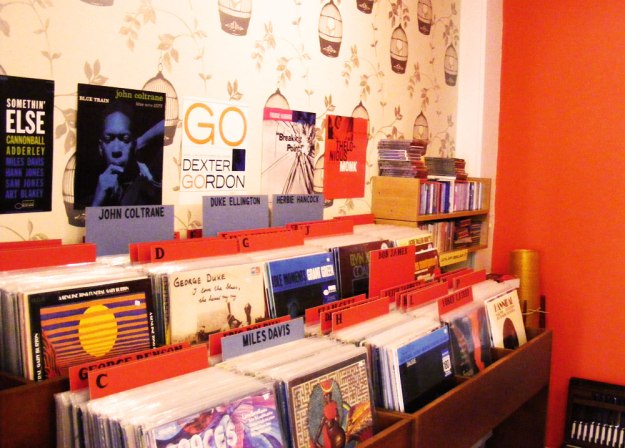
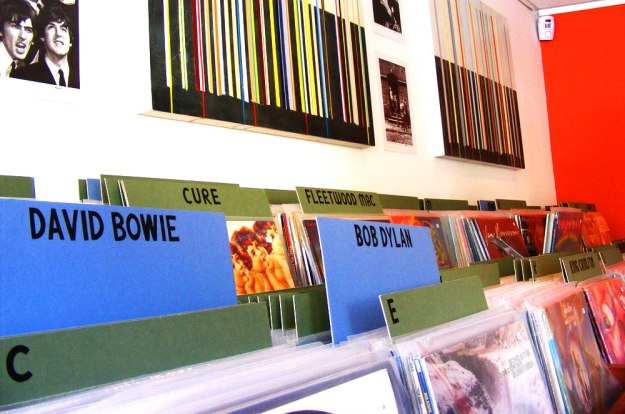
Soul and funk are two genres with which Montgomery’s shop seems fit to burst. For every James Brown and Isaac Hayes record, there’s one from Bobby Womack, Sam Cooke or the Ohio Players. The shop’s jazz section, tucked away in the back (“always put jazz in the back,” Montgomery riffs. “They like dark places, jazz fans”), is mightily impressive. There’s a turntable on hand, too, for anyone who wishes to sit with their coffee and try before they buy. Even the rock section, which sprawls across the front of the store, has top-rated selections from the likes of Pink Floyd, Neil Young, Led Zeppelin and King Crimson. As he takes me further round his store, I get the feeling that Montgomery is proud of every record he sells.
“If a jazz aficionado walks into a record shop and sees a load of Tubby Hayes,” he says, “they’ll go through the rest of the jazz section. If they don’t see that, they’ll think it’s not a good jazz shop – ‘No Tubby Hayes? I’m out’ – and that would be the same for Hampton Hawes or Bill Evans…That’s merchandising. Small independent record shops are poor at it. Used record shops are absolutely abysmal at it. They don’t lay it out so people can find it easily…They don’t use that psychology…They think ‘bugger ‘em, let them find it themselves.’”
Some traditionalists might turn their noses at applying professional retail techniques to the used vinyl market, but Montgomery doesn’t see it this way. “Most people appreciate it,” he says. “Here, it’s neat, tidy and well laid out. People like it here. Generally, record shops are supposed to just have fag butts on the floor and stink of real ale, and put people off.”
“It doesn’t matter how big the business is, I lose sleep over this because it never goes away.”
The psychology of retail is a constant theme when talking to Montgomery. The importance of keeping the bestsellers at the front, for instance (“that way, you’ve got a product in your hand. And once you’ve got a product in your hand, you’re gonna buy more products”). He recalls his time working at Virgin on Market Street in Manchester, back when record stores could sell thousands of albums a day. “You could not put records on shelves between 1pm and 4pm. It was impossible. If you ran out of a line, even if you had it in the stock room, you couldn’t get out there…’cause people used to congregate in record shops…That’s why, you know, at Rise, that’s why that café was put in there: for dwell time and also to appeal to a new demographic. ‘Well, if they don’t buy a record, at least they buy a coffee and a panini and we can get some rent.’”
I ask Montgomery whether profit really is the only goal for him. Does he have any other aims for the shop? “I want to be the frontrunner, I don’t want to be at the back. I want people to come to my shop and say ‘this is how you should do a record shop.’…I want to be the best.”
In order to achieve this, though, Montgomery admits he’ll need to move locations. He has a two-year lease for now, but once that’s up he’ll need to find something bigger, and more central, where he can relocate. The other factor in this is the vinyl market itself. Many continue to argue how the resurgence of vinyl is set for another downswing, how it’s just a fad. Then there is the explosion of vinyl shops opening in the last ten years. Bristol alone has a plethora of independent, second-hand record shops and so what does Montgomery plan to do once the market hits saturation? “I’m great at ironing. I can charge 20 pounds an hour to iron – and that’s more than I make out of selling records. Just gotta teach Dean to iron properly and we’ll have a full service.”
There will always be a certain demand for good-quality records, Montgomery reckons. Whether there’s a profit to be made in future, though, is harder to tell. “If it doesn’t [make a profit], I’ll have to turn my hand to retailing other products. Or not retail at all. I’m unemployable. I can’t get a job. I haven’t interviewed since I was a kid…I don’t know how to dress or be compliant. HR would have me in the book within a week.”
Montgomery’s fine with this, though. He would much rather keep working for himself. I ask him whether he has advice for anyone looking to start a business: “Calculate the risk. Be prepared to lose a lot of sleep. It doesn’t matter how big the business is, I lose sleep over this because it never goes away…I used to run Fopp and I lose as much sleep over this as I did running Fopp…because you have to commit yourself. It’s not for everybody.”
In the end, it’s tough love that Montgomery issues over anything else: “Being self-employed, most people don’t do it – it’s too risky…There are no entitlements to running your own business. You’ve either got to get your sorry ass out of bed and do it or not.”
 Kemptation